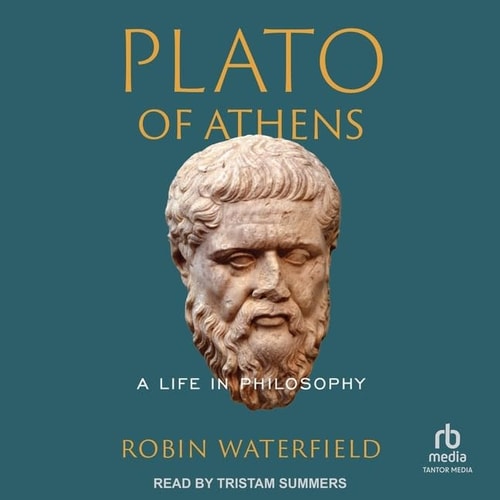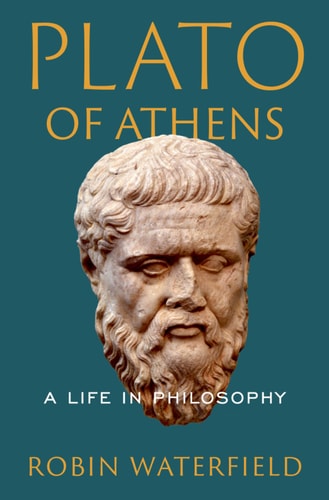
Plato of Athens: A Life in Philosophy
0
0
As an Amazon Associate and affiliate partner, Menrva Books earns from qualifying purchases. Learn more
Author Description
The first ever biography of the founder of Western philosophy Considered by many to be the most important philosopher ever, Plato was born into a well-to-do family in wartime Athens at the end of the fifth century BCE. In his teens, he honed his intellect by attending lectures from the many thinkers who passed through Athens and toyed with the idea of writing poetry. He finally decided to go into politics, but became disillusioned, especially after the Athenians condemned his teacher, Socrates, to death. Instead, Plato turned to writing and teaching. He began teaching in his twenties and later founded the Academy, the world's first higher-educational research and teaching establishment. Eventually, he returned to practical politics and spent a considerable amount of time and energy trying to create a constitution for Syracuse in Sicily that would reflect and perpetuate some of his political ideals. The attempts failed, and Plato's disappointment can be traced in some of his later political works.In his lifetime and after, Plato was considered almost divine. Though a measure of his importance, this led to the invention of many tall tales about him-both by those who adored him and his detractors. In this first ever full-length portrait of Plato, Robin Waterfield steers a judicious course among these stories, debunking some while accepting the kernels of truth in others. He explains why Plato chose to write dialogues rather than treatises and gives an overview of the subject matter of all of Plato's books. Clearly and engagingly written throughout, Plato of Athens is the perfect introduction to the man and his work.
Menrva's Summary
THE THESIS
This biography investigates the life and intellectual development of Plato, the foundational figure of Western philosophy, within the volatile political context of ancient Athens. Robin Waterfield, a noted classicist, synthesizes historical records and philosophical texts to separate the historical man from the hagiographic myths that accumulated over centuries. He argues that Plato's transition from political ambition to philosophical inquiry was a direct response to the execution of Socrates and the systemic failures of Athenian governance. The book provides a comprehensive framework for understanding how Plato's personal experiences shaped the development of the Academy and his subsequent political interventions in Syracuse.
THE SCOPE MAP
What You Will Find
- A chronological examination of Plato's life from his aristocratic upbringing in wartime Athens to his later years in Sicily.
- An analysis of the stylistic choice to utilize the dialogue format rather than traditional treatises.
- A critical review of primary sources and ancient anecdotes to distinguish historical fact from later embellishment.
- A thematic overview of Plato's major works and their connection to his evolving political and educational theories.
THE AUTHORITY PERSPECTIVE
Scholars and general readers alike recognize this work as a balanced and accessible entry point into Platonic studies. Experts highlight the author's ability to navigate complex historical myths while maintaining a clear, scholarly narrative that remains approachable for non-specialists.
Page Count:
295
Publication Date:
2023-01-01
Publisher:
Oxford University Press
ISBN-10:
0197564771
ISBN-13:
9780197564776
Biography
Philosophy
History
Politics
English & College Success
Individual Philosophers
Plato
Biography Autobiography
History & Surveys
Philosophers
Ancient History
History & Schools of Thought
English