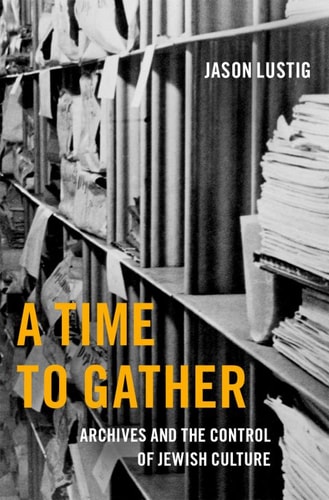
A Time to Gather: Archives and the Control of Jewish Culture
0
0
As an Amazon Associate and affiliate partner, Menrva Books earns from qualifying purchases. Learn more
Author Description
A Time To Gather: Archives And The Control Of Jewish Culture Examines Jewish Archives In Germany, The United States, And Israel/palestine And Argues That Historical Records Took On Potent Value In Modern Jewish Life As Both Sources Of History And Anchors Of Memory, Precisely Because Archives Presented One Way Of Transmitting Jewish Culture And History From One Generation To Another. Creating Archives Was One Means For Jews To Take Control Of Their History, Especially After The Holocaust When Efforts At Archive Restitution Removed Looted Archives From The Hands Of Perpetrators. Such Efforts Also Raised Complex Questions Of Who Could Actually Own This History. This Book Contends That Twentieth-century Jewish Archival Efforts Served As A Proxy For Wide-ranging Struggles Over The Meaning And Control Of Jewish Culture: Whether In Israel's Claims To Be A Successor To European Jewry, The Reality Of American Jewry's Rising Prominence, Or The Question Of The Continued Vitality Of Jewish Life In Germany After The Holocaust, Gathering Archives Was A Means To Assert Dominance Over Jewish Culture By Making Claims Of Ties To The Past And Constituting A Kind Of Birth Certificate Or Legitimization Of Communal Life. A Time To Gather Presents Archive-making As A Metaphor With The Dispersion And Gathering Of Documents Falling In The Context Of The Jews' Long Diasporic History. In The End, A Rising Urgency Of Archival Memory In Jewish Life And The Importance Of History's Traces Meant Archives Were Powerful But Contested Symbols Of Control Of The Past, Present, And Future-- Provided By Publisher.
Menrva's Summary
THE THESIS
This book investigates how the creation and control of Jewish archives served as a critical mechanism for defining Jewish identity and cultural authority throughout the twentieth century. Jason Lustig, a scholar of Jewish history and archival studies, utilizes a comparative framework to analyze the movement of historical records across Germany, the United States, and Israel/Palestine. He argues that the act of gathering documents was not merely a preservation effort but a strategic assertion of power, legitimacy, and continuity in the wake of the Holocaust and the shifting landscape of the Jewish diaspora.
THE SCOPE MAP
What You Will Find
- Comparative analysis of archival practices in Germany, the United States, and Israel/Palestine.
- Examination of post-Holocaust restitution efforts and the legal struggles over looted cultural property.
- Historical investigation into how archives function as symbolic 'birth certificates' for communal legitimacy.
- Theoretical framework linking the physical dispersion of documents to the broader history of the Jewish diaspora.
THE AUTHORITY PERSPECTIVE
Scholars in the field of Jewish studies and archival science recognize this work as a significant contribution to understanding the intersection of memory, power, and institutional history. Readers frequently note that the text provides a rigorous, well-documented examination of how the control of historical records shapes the narrative of modern Jewish identity.
Page Count:
0
Publication Date:
2022-01-01
Publisher:
New York, NY : Oxford University Press,
ISBN-10:
0197563554
ISBN-13:
9780197563557
History
Jewish archives
Jews
Cultural History
Collective memory
Jewish Studies
Identity
Community Tags
Other Editions(3)
Similar Books




Reader Comments
Share Your Thoughts
No comments yet. Be the first to share your thoughts!