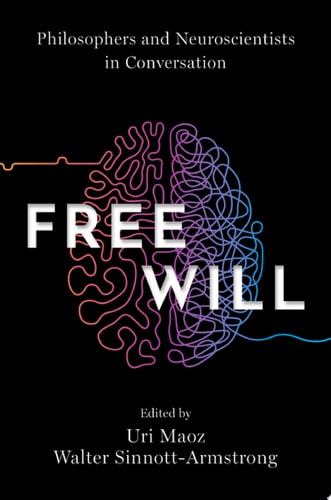
Free Will: Philosophers and Neuroscientists in Conversation
0
0
As an Amazon Associate and affiliate partner, Menrva Books earns from qualifying purchases. Learn more
Author Description
What is free will? Can it exist in a determined universe? How can we determine who, if anyone, possesses it? Philosophers have debated the extent of human free will for millennia. In recent decades neuroscientists have joined the fray with questions of their own. Which neural mechanisms could enable conscious control of action? What are intentional actions? Do contemporary developments in neuroscience rule out free will or, instead, illuminate how it works? Over the past few years, neuroscientists and philosophers have increasingly come to understand that both fields can make substantive contributions to the free-will debate, so working together is the best path forward to understanding whether, when, and how our choices might be freeThis book contains thirty bidirectional exchanges between neuroscientists and philosophers that focus on the most critical questions in the neurophilosophy of free will. It mimics a lively, interdisciplinary conference, where experts answer questions and follow-up questions from the other field, helping each discipline to understand how the other thinks and works. Each chapter is concise and accessible to non-experts-free from disciplinary jargon and highly technical details-but also employs thorough and up-to-date research from experts in the field. The resulting collection should be useful to anyone who wants to get up to speed on the most fundamental issues in the rising field of the neurophilosophy of free will. It will interest experts from philosophy or neuroscience who want to learn about the other discipline, students in courses on a host of related topics, and lay readers who are fascinated by these profound issues.
Menrva's Summary
THE THESIS
This book investigates whether human free will can coexist with a determined universe by bridging the gap between philosophical inquiry and neuroscientific research. Editors Uri Maoz and Walter P. Sinnott-Armstrong curate a series of structured dialogues between leading experts in both fields to examine the neural mechanisms of decision-making and the conceptual definitions of agency. By moving beyond disciplinary silos, the text argues that a collaborative approach is necessary to resolve long-standing questions regarding intentional action and conscious control.
THE SCOPE MAP
What You Will Find
- Thirty bidirectional exchanges between neuroscientists and philosophers.
- Analysis of neural mechanisms underlying conscious control and intentional action.
- Interdisciplinary debate on the compatibility of determinism and free will.
- Accessible summaries of current research findings in neurophilosophy.
THE AUTHORITY PERSPECTIVE
Experts and students alike identify this collection as a vital resource for navigating the intersection of cognitive science and ethics. Readers frequently note that the conversational format effectively demystifies complex technical concepts, making it a foundational text for those entering the field of neurophilosophy.
Page Count:
344
Publication Date:
2022-01-25
Publisher:
Oxford University Press
ISBN-10:
0197572154
ISBN-13:
9780197572153
Science
Philosophy
Non-Fiction
Psychology
Neuroscience
Community Tags
Similar Books