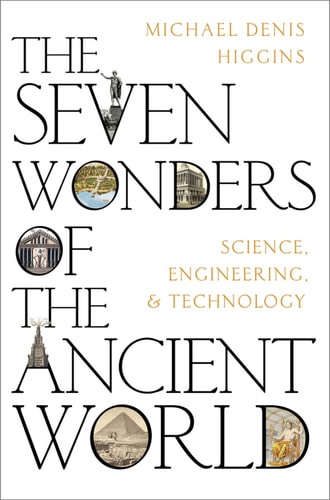
The Seven Wonders of the Ancient World: Science, Engineering and Technology
0
0
As an Amazon Associate and affiliate partner, Menrva Books earns from qualifying purchases. Learn more
Author Description
Michael Higgins broadens our understanding of the Seven Wonders of the Ancient World by bringing science, engineering, and technology together with ancient documentation and archaeological findings.The Seven Wonders of the Ancient World (Pyramids of Giza, Hanging Gardens of Babylon, Statue of Zeus at Olympia, Temple of Artemis at Ephesus, Colossus of Rhodes, and the Pharos Lighthouse at Alexandria) have been a source of fascination for more than two thousand years. Even though six of the Wonders are now gone, historians and archaeologists have attempted to explain how and why these ancient monuments were created. However, never before have these attempts been synthesized with the contributions of science, engineering, and technology.In The Seven Wonders of the Ancient World, Michael Higgins combines scientific research together with ancient documentation and archaeological findings to present a rich, multi-layered portrait of each monument. To build a Wonder took advanced social organization and wealth generated by agriculture and trade, both of which depended on regional geography and climate. It also took natural resources, as well as an understanding of the environment where the Wonder would stand. Even the natural processes often responsible for a Wonder's destruction sometimes contributed to the preservation of its ruins. These and other topics are accessibly explored in this book. After using science, engineering, and technology to answer key questions about the Wonders, Higgins speculates on how we could recreate these ancient monuments and make new wonders that could withstand environmental changes and natural disasters for the next two thousand years.
Menrva's Summary
THE THESIS
How did the ancient civilizations construct the Seven Wonders, and what can modern engineering learn from their structural successes and failures? Michael Denis Higgins utilizes his background in scientific research to bridge the gap between classical historical documentation and modern archaeological findings. By analyzing the environmental, social, and technological factors of the ancient world, the author provides a framework for understanding the logistical requirements of these monumental projects. The text evaluates the intersection of natural resource management, climate, and structural integrity to explain both the creation and the eventual decay of these historic sites.
THE SCOPE MAP
What You Will Find
- Detailed analysis of the Pyramids of Giza, Hanging Gardens of Babylon, Statue of Zeus, Temple of Artemis, Colossus of Rhodes, and the Pharos Lighthouse.
- Examination of the role of regional geography, agriculture, and trade in funding ancient construction.
- Integration of geological and environmental data to explain the preservation or destruction of archaeological ruins.
- Speculative proposals for applying ancient construction principles to modern sustainable architecture.
THE AUTHORITY PERSPECTIVE
Readers and scholars appreciate this work for its unique interdisciplinary approach to classical history. The text is noted for its ability to translate complex engineering concepts into accessible language for a general audience interested in archaeology and ancient technology.
Page Count:
340
Publication Date:
2023-01-01
Publisher:
Oxford University Press
ISBN-10:
0197648169
ISBN-13:
9780197648162
History
Science
Technology
Engineering
Technology & Engineering
Archaeology
Earth Sciences
Ancient History
Trades & Technology
Community Tags
Other Editions(2)
Similar Books