Overfitting and Heuristics in Philosophy
0
0
As an Amazon Associate and affiliate partner, Menrva Books earns from qualifying purchases. Learn more
Author Description
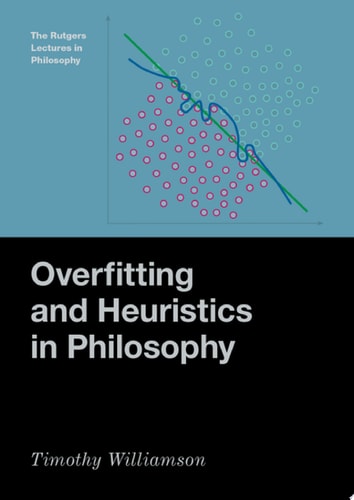
The Main Aim Of This Book Is To Encourage Philosophers To Take A More Sophisticated And Scientific Attitude To Their Handling Of Evidence, Both In Theory And In Practice, By Introducing Two Categories Neglected In Current Metaphilosophy. The First Category Is That Of Heuristics. These Are Typically Efficient Ways Of Solving Problems Of Some Kind, Quick And Easy To Use, And Mostly But Not Always Reliable. Those Most Probably Central To Philosophical Methodology Are More Or Less Humanly Universal General Cognitive Heuristics Which We Employ Without Conscious Reflection. In Many Plausible Cases, They Can Be Shown To Be Implicitly Inconsistent, And So Cannot Be Perfectly Valid, Though For Evolutionary Reasons They Are Likely To Be Fairly Reliable In Normal Cases. Such Heuristics May Well Generate False But Convincing Data As Applied To Some Actual Or Hypothetical. Arguably, The Heuristics Also Generate Philosophical Paradoxes, Just As Heuristics Embedded In Our Perceptual Systems Generate Perceptual Illusions. The Second Category Is That Of Overfitting. This Is A Recognized Pathology In Science, When Models Are Allowed To Become Very Complicated To Achieve A Close Fit With Data, And Further Complications Typically Keep Having To Be Made As New Data Comes In. When The Data Contains Errors, Such Theorizing Provides Little Insight. Scientists Guard Against Overfitting By Strongly Preferring Comparatively Simple Models. Philosophers Should Learn To Do The Same. This Approach Is Applied To Debates Between Coarse-grained (intensionalist) And Fine-grained (hyperintensionalist) Theories Of Metaphysics, Ascriptions Of Propositional Attitudes, And Other Topics, In Favour Of Intensionalism
Menrva's Summary
THE THESIS
This book investigates how the application of heuristics and the problem of overfitting undermine current philosophical methodology and proposes a more scientifically rigorous approach to evidence. Timothy Williamson, a prominent figure in contemporary analytic philosophy, draws upon cognitive science and statistical modeling to argue that philosophers often rely on implicit, unreliable cognitive shortcuts and overly complex theoretical models. He contends that by adopting a preference for simpler models and acknowledging the limitations of human intuition, the discipline can avoid the pitfalls of generating false data and persistent paradoxes.
THE SCOPE MAP
What You Will Find
- An analysis of universal human cognitive heuristics and their role in creating philosophical paradoxes.
- A detailed examination of overfitting as a methodological pathology in philosophical theory construction.
- A comparative study of coarse-grained intensionalist versus fine-grained hyperintensionalist theories of metaphysics.
- Practical recommendations for applying scientific standards of model simplicity to propositional attitude ascriptions.
THE AUTHORITY PERSPECTIVE
Experts recognize this work as a significant intervention in metaphilosophical discourse, challenging established norms of theory building. Readers frequently note the technical density of the prose, which requires a strong background in analytic philosophy to fully grasp the implications of the author's arguments.
Page Count:
0
Publication Date:
2024-01-01
Publisher:
New York, NY : Oxford University Press,
ISBN-10:
0197779247
ISBN-13:
9780197779248
Philosophy
Complexity Philosophy
Logic
Methodology
Heuristic
Epistemology
Metaphilosophy
Community Tags
Other Editions(3)

Similar Books








Reader Comments
Share Your Thoughts
No comments yet. Be the first to share your thoughts!