
Electra
0
0
As an Amazon Associate and affiliate partner, Menrva Books earns from qualifying purchases. Learn more
Author Description
Based on the conviction that only translators who write poetry themselves can properly recreate the celebrated and timeless tragedies of Aeschylus, Sophocles, and Euripides, the Greek Tragedy in New Translations series offers new translations that go beyond the literal meaning of the Greek in order to evoke the poetry of the originals. Under the general editorship of Herbert Golder and the late William Arrowsmith, each volume includes a critical introduction, commentary on the text, full stage directions, and a glossary of the mythical and geographical references in the plays. This vital translation of Euripides' Electra recreates the prize-winning excitement of the original play. Electra, obsessed by dreams of avenging her father's murder, impatiently awaits the return of her exiled brother Orestes. After his arrival Electra uses Orestes as her instrument of vengeance, killing their mother's husband, then their mother herself - and only afterward do they see the evil inherent in these seemingly just acts. But in his usual fashion, Euripides has imbued myth with the reality of human experience, counterposing suspense and horror with comic realism and down-to-earth comments on life.
Menrva's Summary
THE PULSE
Electra centers on the protagonist's obsessive quest to avenge her father's murder, which culminates in a cycle of violence that forces her to confront the moral consequences of her actions. Driven by grief and resentment, Electra waits for her exiled brother, Orestes, to return so they can execute their plan against their mother and her husband. The narrative follows a traditional Greek dramatic structure, utilizing dialogue and choral interludes to explore the psychological toll of vengeance. The play operates within the rigid constraints of ancient Greek social and religious expectations, where the pursuit of justice often leads to unforeseen moral decay.
INSIDE THE PAGES
- Exploration of the psychological impact of long-term trauma and obsession.
- Use of the traditional Greek chorus to provide context and moral commentary.
- Incorporation of comic realism to contrast with the gravity of the central conflict.
- Examination of the moral ambiguity inherent in acts of retributive justice.
- Focus on the domestic and human elements of established mythological figures.
- Inclusion of detailed stage directions to guide modern performance.
- Analysis of the tension between divine mandate and human agency.
- Integration of a critical introduction and glossary for historical context.
THE COLLECTIVE ECHO
Readers and critics frequently highlight Euripides' ability to ground mythological archetypes in the complexities of human experience. Discussion often centers on the play's shift from heroic vengeance to the stark, uncomfortable reality of matricide. Many observers note that the inclusion of comic realism serves to heighten the overall sense of horror rather than diminish it. The work is widely recognized for its focus on the internal state of the protagonist, distinguishing it from other versions of the same myth. Scholars often point to the play as a primary example of how classical drama can interrogate the morality of violence through a domestic lens.
Page Count:
270
Publication Date:
1939-01-01
Publisher:
Oxford at the Clarendon Press
ISBN-10:
0198141211
ISBN-13:
9780198141211
Travel
Politics
Philosophy
Drama
History
Mythology
Plays
Theater
Classical
Greek Tragedy
Ethics & Morality
Europe
Dramas & Plays
Community Tags
Other Editions(15)
Independently Published
2019
Default edition
CreateSpace Independent Publishing Platform
2018

CreateSpace Independent Publishing Platform
2016

CreateSpace Independent Publishing Platform
2016
Oxbow Books
2013
BiblioBazaar
2008
Digireads.com
2006
Bobbs-Merrill Co
2000
De Gruyter, Incorporated
1998
Oxford University Press
1994
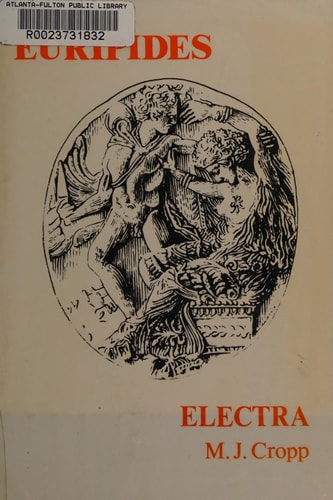
Oxford University Press
1994
Aris & Phillips
1988
Oxford University Press
1979
Oxford at the Clarendon Press
1939

Unwin Hyman
1905
Similar Books






Reader Comments
Share Your Thoughts
No comments yet. Be the first to share your thoughts!