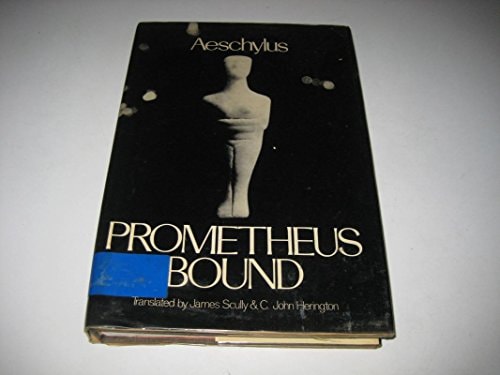
Aeschylus: : Prometheus Bound
0
0
As an Amazon Associate and affiliate partner, Menrva Books earns from qualifying purchases. Learn more
Author Description
This work has been selected by scholars as being culturally important, and is part of the knowledge base of civilization as we know it. This work was reproduced from the original artifact, and remains as true to the original work as possible. Therefore, you will see the original copyright references, library stamps (as most of these works have been housed in our most important libraries around the world), and other notations in the work.This work is in the public domain in the United States of America, and possibly other nations. Within the United States, you may freely copy and distribute this work, as no entity (individual or corporate) has a copyright on the body of the work.As a reproduction of a historical artifact, this work may contain missing or blurred pages, poor pictures, errant marks, etc. Scholars believe, and we concur, that this work is important enough to be preserved, reproduced, and made generally available to the public. We appreciate your support of the preservation process, and thank you for being an important part of keeping this knowledge alive and relevant.
Menrva's Summary
THE PULSE
The titan Prometheus faces eternal punishment at the hands of Zeus for defying the divine order by gifting fire to humanity. Prometheus is chained to a remote crag in the Caucasus Mountains, where he endures the physical torment of his captivity while maintaining his intellectual defiance against the new ruler of the gods. He is visited by various mythological figures, including Oceanus and Io, who serve as conduits for the play's exploration of power, suffering, and the nature of tyranny. The narrative unfolds through a series of dialogues that contrast the static, suffering protagonist with the shifting perspectives of his visitors. The play operates within the rigid constraints of classical Greek tragedy, utilizing a formal structure that emphasizes rhetorical debate over physical action.
INSIDE THE PAGES
- Use of a static protagonist bound to a physical location
- Exploration of the conflict between individual will and divine authority
- Incorporation of choral odes to provide thematic commentary
- Examination of the nature of tyranny and political power
- Integration of mythological figures as narrative foils
- Focus on the concept of foreknowledge and inevitable fate
- Emphasis on long-form rhetorical speeches and debate
- Minimal physical movement to heighten the tension of the dialogue
THE COLLECTIVE ECHO
Discussion often centers on the stark portrayal of Zeus as an uncompromising autocrat and the moral ambiguity of Prometheus's rebellion. Readers frequently highlight the play's intense focus on the psychological state of the protagonist despite his physical immobility. Critics often examine the structural simplicity of the work, noting how the limited cast of characters allows for a concentrated exploration of philosophical themes. Many readers appreciate the enduring relevance of the conflict between the individual and the state, which remains a primary point of analysis in academic and theatrical circles.
Page Count:
0
Publication Date:
1975-01-01
Publisher:
Oxford University Press
ISBN-10:
0192125850
ISBN-13:
9780192125859
Drama
Classical
Mythology
Greek Tragedy
Plays
Dramas & Plays
Community Tags
Similar Books