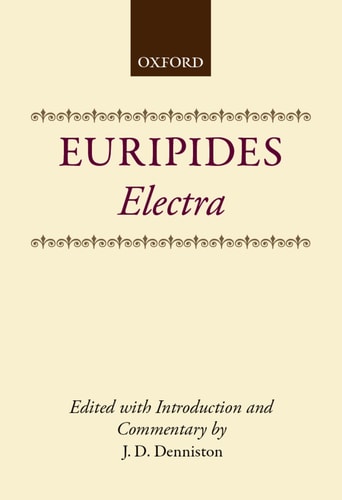
Electra
0
0
As an Amazon Associate and affiliate partner, Menrva Books earns from qualifying purchases. Learn more
Author Description
The play begins with a peasant's brief recap of some of the background story: how the vengeful Clytemnestra killed Agamemnon on his return from the seige of Troy, and now rules over Argos with her lover, Aegisthus; how Electra's brother Orestes was sent away by the insecure Clytemnestra and Aegisthus, and put under the care of the king of Phocis, where he became friends with the king's son, Pylades; and how Electra herself was also cast out of the royal house and married off to a farmer, a kind man who has never taken advantage of her or her family, and who Electra helps with household chores in return. Despite her genuine appreciation for her peasant husband, Electra clearly still strongly resents both being cast out of her house and her mother's loyalty to the usurping Aegisthus.
Menrva's Summary
THE PULSE
Electra centers on the protagonist's obsessive desire for vengeance against her mother, Clytemnestra, for the murder of her father, Agamemnon. Electra lives in exile, married to a humble farmer who respects her status, while she harbors deep resentment toward the ruling usurpers. When her brother Orestes returns to Argos, the siblings coordinate a plan to reclaim their honor through a violent act of retribution. The narrative unfolds through a series of intense dialogues and confrontations that test the moral boundaries of justice and familial duty.
INSIDE THE PAGES
- Exploration of the psychological toll of long-term resentment
- Contrast between the nobility of the protagonists and their impoverished circumstances
- Use of the chorus to provide moral commentary and atmospheric tension
- Examination of the cycle of violence inherent in Greek tragedy
- Focus on the domestic reality of the characters despite their royal lineage
- Dramatic irony regarding the recognition of Orestes by Electra
- Thematic tension between divine will and human agency
- Formal structure typical of Attic tragedy with alternating dialogue and choral odes
THE COLLECTIVE ECHO
Discussion often centers on the unique portrayal of Electra as a character defined by her bitterness and domestic struggle rather than just her grief. Readers frequently highlight the play's grounded setting, which contrasts sharply with the grander, more mythic treatments of the same story by other playwrights. Critics often analyze the moral ambiguity of the final act, where the act of matricide leaves the characters in a state of profound isolation rather than triumph. The pacing is noted for its steady build toward the climactic confrontation, ensuring that the emotional stakes remain high throughout the performance.
Page Count:
270
Publication Date:
1979-04-12
Publisher:
Oxford University Press
ISBN-10:
0198720947
ISBN-13:
9780198720942
Drama
Classical
Greek Tragedy
Dramatic works
Mythology
Plays
Community Tags
Other Editions(15)
Independently Published
2019
Default edition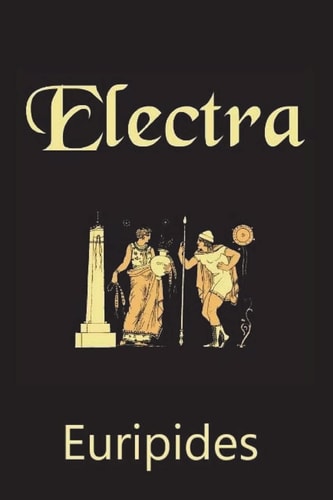
CreateSpace Independent Publishing Platform
2018

CreateSpace Independent Publishing Platform
2016

CreateSpace Independent Publishing Platform
2016
Oxbow Books
2013
BiblioBazaar
2008
Digireads.com
2006
Bobbs-Merrill Co
2000
De Gruyter, Incorporated
1998
Oxford University Press
1994
Oxford University Press
1994
Aris & Phillips
1988
Oxford University Press
1979
Oxford at the Clarendon Press
1939

Unwin Hyman
1905

Reader Comments
Share Your Thoughts
No comments yet. Be the first to share your thoughts!