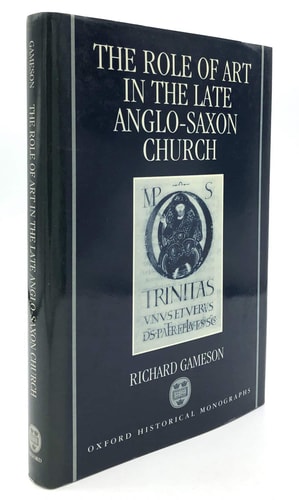
The Role of Art in the Late Anglo-Saxon Church
0
0
As an Amazon Associate and affiliate partner, Menrva Books earns from qualifying purchases. Learn more
Author Description
An exploration of the role of early medieval religious art in its historical context, focusing on England from the reign of Alfred the Great to the aftermath of the Norman conquest. Tenth and eleventh century society expressed itself extensively through visual means, and the surviving material provides a rich body of evidence for the religious culture of the time. Combining visual and documentary evidence, The Role of Art in the Late Anglo-Saxon Church sheds new light on a wide range of magnificent art works and their functions, and offers fresh perspectives on the ecclesiastical history and beliefs of late Anglo Saxon England, with important implications for the study of early medieval civilization in general.
Menrva's Summary
THE THESIS
This work investigates how visual art functioned as a primary medium for religious expression and cultural identity within the Anglo-Saxon Church from the reign of Alfred the Great through the Norman Conquest. Richard Gameson, a specialist in medieval art and manuscripts, synthesizes archaeological findings, surviving artifacts, and contemporary documentary evidence to construct a framework for understanding the ecclesiastical priorities of the period. By analyzing the intersection of material culture and theological practice, the author argues that art served as an active participant in the religious life of tenth and eleventh-century England rather than merely a decorative byproduct.
THE SCOPE MAP
What You Will Find
- Analysis of religious art from the late ninth century to the post-1066 era.
- Integration of visual evidence from manuscripts, metalwork, and sculpture with ecclesiastical texts.
- Examination of the functional roles of art in liturgy, monastic life, and private devotion.
- Assessment of the impact of the Norman Conquest on existing Anglo-Saxon artistic traditions.
THE AUTHORITY PERSPECTIVE
Scholars and historians frequently cite this monograph as a foundational text for understanding the material culture of the late Anglo-Saxon period. Readers often note the academic density of the prose, which provides a rigorous examination of both the aesthetic and functional dimensions of medieval religious artifacts.
Page Count:
360
Publication Date:
1995-07-13
Publisher:
Clarendon Press
ISBN-10:
0198205414
ISBN-13:
9780198205418
History
Anglo-Saxons
Christian Art
Art History