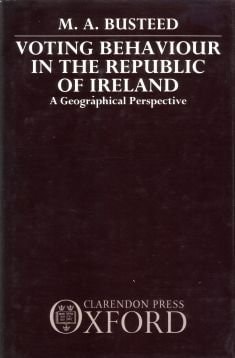
Voting Behaviour in the Republic of Ireland: A Geographical Perspective
0
0
As an Amazon Associate and affiliate partner, Menrva Books earns from qualifying purchases. Learn more
Author Description
This is a study of the clash between traditional and modern cultural values in present-day Ireland as indicated by voting behavior from 1981 to 1986 when there were three general elections and two referendums on the sensitive issues of abortion and divorce. Analysis of the results indicatesthat for many people locality and kinship were still important factors in electoral choice, while traditional Catholic teachings continued to provide the basic guidelines of life. The results also revealed the growth of a significant, mainly urban, minority which was more liberal in outlook andregarded Ireland as a secular society. The conclusions offer valuable information on the effects of the interaction of broad, international economic and social forces on a small, mainly rural country.
Menrva's Summary
THE THESIS
This study investigates how the intersection of traditional cultural values and modern secularization influenced electoral outcomes in the Republic of Ireland during the early 1980s. M. A. Busteed utilizes a geographical framework to analyze voting patterns across three general elections and two critical referendums held between 1981 and 1986. By examining regional data, the author argues that while kinship and locality remained primary drivers for rural voters, a distinct urban minority began to shift the national political landscape toward secularism.
THE SCOPE MAP
What You Will Find
- Analysis of electoral data from the Republic of Ireland between 1981 and 1986.
- Examination of the impact of Catholic social teachings on political decision-making.
- Comparative study of rural versus urban voting demographics.
- Assessment of how international economic and social forces influence small-nation political behavior.
THE AUTHORITY PERSPECTIVE
Experts recognize this work as a foundational geographical analysis of Irish political behavior during a period of significant social transition. Readers frequently note the academic density of the prose and the author's precise application of spatial analysis to electoral results.
Page Count:
264
Publication Date:
1991-01-31
Publisher:
Oxford University Press
ISBN-10:
0198232764
ISBN-13:
9780198232766
Politics & Government
Ireland
Geography
Sociology
Elections
Voting
Community Tags
Similar Books