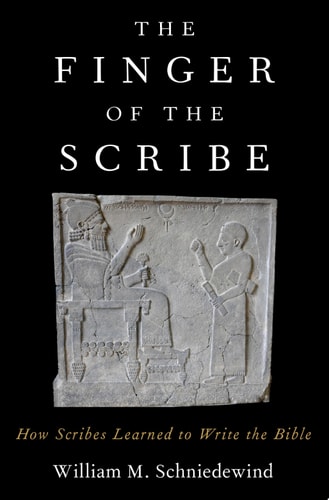
The Finger of the Scribe
0
0
As an Amazon Associate and affiliate partner, Menrva Books earns from qualifying purchases. Learn more
Author Description
One Of The Enduring Problems In Biblical Studies Is How The Bible Came To Be Written. Clearly, Scribes Were Involved. But Our Knowledge Of Scribal Training In Ancient Israel Is Limited. William Schniedewind Explores The Unexpected Cache Of Inscriptions Discovered At A Remote, Iron Age Military Post Called Kuntillet 'ajrud To Assess The Question Of How Scribes Might Have Been Taught To Write. Here, Far From Such Urban Centers As Jerusalem Or Samaria, Plaster Walls And Storage Pithoi Were Littered With Inscriptions. Apart From The Sensational Nature Of Some Of The Contents-perhaps Suggesting Yahweh Had A Consort-these Inscriptions Also Reflect Actual Writing Practices Among Soldiers Stationed Near The Frontier. What Emerges Is A Very Different Picture Of How Writing Might Have Been Taught, As Opposed To The Standard View Of Scribal Schools In The Main Population Centers.
Menrva's Summary
THE THESIS
How did the scribal education system function in ancient Israel, and what does the evidence from peripheral sites reveal about the dissemination of literacy? William M. Schniedewind, a scholar of ancient Near Eastern languages and biblical history, utilizes archaeological data from the Iron Age site of Kuntillet 'Ajrud to challenge the prevailing academic assumption that literacy was restricted to centralized urban scribal schools. He argues that the presence of diverse inscriptions at a remote military outpost suggests a more decentralized and pragmatic approach to writing instruction than previously theorized.
THE SCOPE MAP
What You Will Find
- Analysis of epigraphic evidence from Kuntillet 'Ajrud, including plaster wall inscriptions and storage pithoi.
- A comparative study of scribal training practices in urban centers versus frontier military outposts.
- Examination of the social and political implications of literacy among non-elite populations in the Iron Age.
Scope Limits
- The study focuses primarily on the specific findings at Kuntillet 'Ajrud and does not provide a comprehensive survey of all Iron Age scribal sites.
- The book does not attempt to resolve broader theological debates regarding the contents of the inscriptions beyond their function as evidence of literacy.
THE AUTHORITY PERSPECTIVE
Scholars in the field of biblical archaeology recognize this work as a significant contribution to the understanding of ancient literacy and scribal culture. Readers frequently note the academic density of the prose, which requires a foundational knowledge of Iron Age history and epigraphy to fully appreciate the author's arguments.
Page Count:
256
Publication Date:
2019-01-01
Publisher:
Oxford University Press
ISBN-10:
0190052473
ISBN-13:
9780190052478
History
Archaeology
Linguistics
Epigraphy
Near East
Community Tags
Similar Books