The Truth About Denial
0
0
As an Amazon Associate and affiliate partner, Menrva Books earns from qualifying purchases. Learn more
Author Description
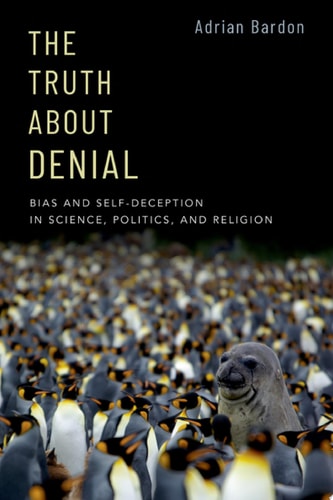
People Believe What They Want To Believe. It Is A Striking-yet All Too Familiar-fact About Human Beings That Our Belief-forming Processes Can Be So Distorted By Fears, Desires, And Prejudices That An Otherwise Sensible Person May Sincerely Uphold A False Claim About The World Despite Overwhelming Evidence To The Contrary. When We Describe Someone As Being In Denial, We Mean That He Or She Is Personally Threatened By Some Set Of Facts And Consequently Fails To Assess The Situation Properly According To The Evidence, Instead Arguing And Interpreting Evidence In Light Of A Pre-established Conclusion. In A World Polarized Over Politics, Culture, Race, And Religion, It Is Evident That Ideological Commitments Can Influence One's Perception Of Reality In Socially Destructive Ways, Especially When One Perceives A Threat To These Commitments. When Group Interests, Creeds, Or Dogmas Are Threatened By Unwelcome Factual Information, Biased Thinking Can Become Ideological Denialism. This Is A Problem That Affects Everybody: Whereas Denial Can Interfere With Individual Well-being, Ideological Denialism Can Stand In The Way Of Urgent Advancements In Public Policy. This Book Offers An Accessible, Historically And Scientifically Informed Overview Of Our Understanding Of Denial And Denialism. Adrian Bardon Introduces The Reader To The Latest Developments In The Interdisciplinary Study Of Denial, And Then Investigates The Role Of Human Psychology And Ideology In, Respectively, Science Denial, Economic Policy, And Religious Belief.
Menrva's Summary
THE THESIS
This book investigates the cognitive and psychological mechanisms that allow individuals to maintain false beliefs despite overwhelming evidence to the contrary. Adrian Bardon, a professor of philosophy, synthesizes research from psychology, political science, and the history of science to explain how personal threats to identity and ideology trigger denialism. He argues that when factual information challenges deeply held group commitments, human cognition is prone to biased interpretation rather than objective assessment.
THE SCOPE MAP
What You Will Find
- An interdisciplinary overview of the cognitive biases that facilitate denial.
- Analysis of how ideological commitments influence perception in social and political contexts.
- Examination of denialism within the specific domains of scientific consensus, economic policy, and religious belief.
Scope Limits
- The text does not provide a clinical guide for treating individual psychological disorders related to delusion.
- It does not offer a comprehensive history of every specific denialist movement in modern politics.
THE AUTHORITY PERSPECTIVE
Experts and readers characterize this work as a clear and accessible synthesis of complex interdisciplinary research. It is frequently cited as a useful primer for understanding the intersection of cognitive psychology and contemporary political polarization.
Page Count:
240
Publication Date:
2019-01-01
Publisher:
Oxford University Press
ISBN-10:
0190062282
ISBN-13:
9780190062286
Psychology
Non-Fiction
Philosophy
Sociology
Community Tags
Other Editions(2)

Similar Books