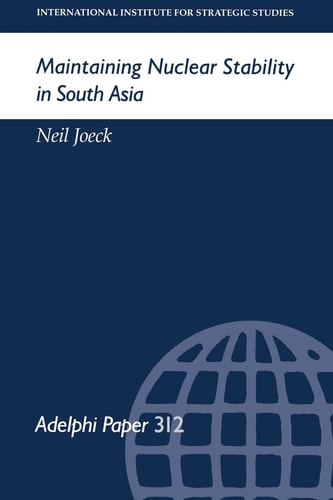
Maintaining Nuclear Stability in South Asia
0
0
As an Amazon Associate and affiliate partner, Menrva Books earns from qualifying purchases. Learn more
Author Description
Argues that, while nuclear weapons and ballistic missiles cast a shadow over Indo-Pakistani relations, they do not create strategic stability. He asserts that the development of command and control mechanisms would enhance stability, but that diplomatic steps focused on missiles must also be considered. Improved command and control and diplomatic engagement will provide some insurance that nuclear weapons are not used in any future conflict.
Menrva's Summary
THE THESIS
This work investigates whether the presence of nuclear weapons and ballistic missiles in South Asia inherently fosters strategic stability between India and Pakistan. Neil Joeck, a researcher specializing in regional security, examines the volatile intersection of nuclear proliferation and diplomatic tension. He argues that the mere possession of these weapons does not guarantee peace and proposes that stability requires a dual approach involving robust command and control infrastructure alongside sustained diplomatic engagement regarding missile technology.
THE SCOPE MAP
What You Will Find
- Analysis of Indo-Pakistani nuclear deterrence dynamics
- Evaluation of command and control mechanisms for nuclear assets
- Examination of diplomatic strategies for missile non-proliferation
- Assessment of risk mitigation in future regional conflicts
THE AUTHORITY PERSPECTIVE
Experts in international security view this text as a critical examination of the specific nuclear challenges facing South Asia. Readers frequently note the technical focus on command and control systems as a foundational element for understanding regional stability efforts.
Page Count:
92
Publication Date:
2005-02-14
Publisher:
Routledge
ISBN-10:
0198294069
ISBN-13:
9780198294061
International relations
Nuclear Strategy
Military History
Community Tags
Other Editions(4)


Similar Books