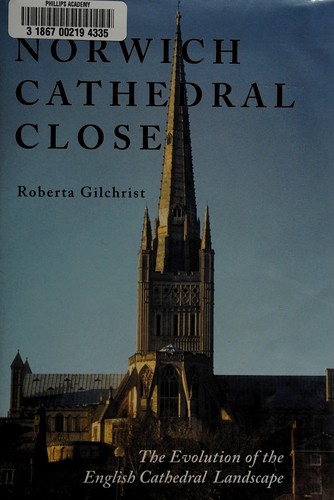
Norwich Cathedral Close: The Evolution of the English Cathedral Landscape
0
0
As an Amazon Associate and affiliate partner, Menrva Books earns from qualifying purchases. Learn more
Author Description
This study explores the development of Norwich cathedral close from its foundation in 1096 up to c. 1700. Archaeological, visual and historical evidence is used to reconstruct the landscape and buildings of the close, and transformations in their use and meaning over time. In contrast with previous approaches to cathedrals, the emphasis is placed here on the layout of the monastery, and the ways in which buildings and spaces were used and perceived by different social groups, including members of the cathedral community, their servants, and visitors to the precinct. Patterns observed at Norwich are placed in comparative context with other cathedral-priories and appropriate urban and rural sites, to draw out the development of the English cathedral landscape over six centuries. This long-term perspective unites evidence from across the traditional medieval / post-medieval divide: in contrast with all other categories of medieval monastery, cathedral-priories weathered the Reformation, and offer unique potential to study continuity and change through the eruptions of the Reformation and beyond. This innovative study both outlines the development of the cathedral landscape and, using evidence from Norwich, supplies a contextual study of changing sacred and social space in a single institution.--Jacket.
Menrva's Summary
THE THESIS
This study investigates the transformation of Norwich Cathedral Close from its 1096 foundation to approximately 1700. The author utilizes archaeological, visual, and historical evidence to reconstruct the landscape and buildings of the close, examining shifts in their use and meaning over time. Unlike previous studies, this work emphasizes the layout of the monastery and how spaces were perceived by various social groups, including the cathedral community, their servants, and visitors. Patterns observed at Norwich are contextualized with other cathedral-priories and urban/rural sites to illuminate the evolution of the English cathedral landscape over six centuries.
THE SCOPE MAP
- Reconstruction of the Norwich Cathedral Close landscape and buildings from 1096 to c. 1700.
- Analysis of transformations in the use and meaning of spaces over time.
- Emphasis on the layout of the monastery and its spaces.
- Exploration of how buildings and spaces were used and perceived by different social groups.
- Comparative context with other cathedral-priories and urban/rural sites.
- Examination of continuity and change through the Reformation and beyond.
- Contextual study of changing sacred and social space within a single institution.
THE AUTHORITY PERSPECTIVE
This study is positioned as an innovative contribution to understanding the English cathedral landscape, offering a long-term perspective that bridges the medieval and post-medieval periods. By focusing on the specific case of Norwich Cathedral Close, the author aims to provide a detailed contextual study of evolving sacred and social spaces within a single, enduring institution. The comparative approach suggests that the findings will have broader implications for understanding similar sites across England. The book's methodology, integrating diverse evidence types, is likely to appeal to scholars of medieval and early modern history, archaeology, and architectural history.
Page Count:
308
Publication Date:
2005-01-01
ISBN-10:
1843831732
ISBN-13:
9781843831730
Non-Fiction
History
Architecture
Religious History
Community Tags
Similar Books