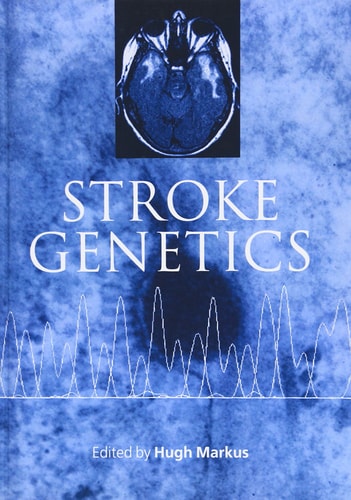
Stroke Genetics
0
0
As an Amazon Associate and affiliate partner, Menrva Books earns from qualifying purchases. Learn more
Author Description
Stroke should be thought of as a syndrome, or collection of disease processes, rather than a single disease. It is characterised by restriction of blood flow to the brain and is responsible for imposing a very significant burden on healthcare systems, accounting for more than four million deaths per year. It can be directly linked to the majority of adult neurological disability as well as contributing to vascular dementia, the second most common cause of dementia after Alzheimer's Disease.Despite its importance on a population basis, research into the genetics of stroke has lagged behind many other disorders; however, the situation is changing and there is now growing evidence that genetic factors are important in the stroke risk, often acting via interactions with conventional risk factors.This book will provide an introduction to the field of stroke genetics, covering the general principles of genetic research and the epidemiology of stroke, before discussing the details of monogenic and polygenic disorders and the full range of cerebrovascular diseases, including ischaemic stroke, primary intra-cerebral haemorrage and vascular malformation, and subarachnoid haemorrage and intra-cerebral aneuyrisms. The book concludes by describing a practical approach to investigating patients with stroke for underlying genetic disorders, including an introduction to genetic counselling. There is also a list of useful websites.This will be essential reading for all clinicians treating stroke patients, neurologists and researchers in the field of cerebrovascular disease.
Menrva's Summary
THE THESIS
This book investigates the role of genetic factors in the etiology and risk profile of stroke, challenging the view of stroke as a singular disease rather than a complex syndrome. Author Hugh S. Markus, a prominent expert in cerebrovascular disease, synthesizes current research to explain how genetic predispositions interact with traditional vascular risk factors. The text provides a structured framework for clinicians to understand the transition from general genetic principles to the specific clinical management of cerebrovascular disorders.
THE SCOPE MAP
What You Will Find
- Principles of genetic research applied to cerebrovascular epidemiology
- Analysis of monogenic and polygenic stroke disorders
- Clinical methodologies for investigating patients with suspected genetic stroke causes
- Guidance on genetic counselling and practical diagnostic approaches
THE AUTHORITY PERSPECTIVE
Experts recognize this work as a foundational text for clinicians and researchers seeking to integrate genetic diagnostics into stroke care. Readers frequently note the clarity of the clinical approach, which bridges the gap between complex genetic data and bedside practice.
Page Count:
358
Publication Date:
2003-05-29
Publisher:
Oxford University Press
ISBN-10:
0198515863
ISBN-13:
9780198515869
Science
Health
Medical
Genetics
Neurology
Community Tags
Similar Books