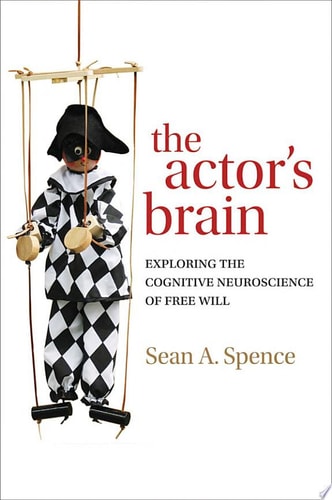
The Actor's Brain: Exploring the Cognitive Neuroscience of Free Will
0
0
As an Amazon Associate and affiliate partner, Menrva Books earns from qualifying purchases. Learn more
Author Description
Is free will just an illusion? What is within the brain that allows us to pursue our own actions and objections? What is it about this organ that permits the emergence of seemingly purposeful behaviour, giving us the impression that we are "free"? This book takes a journey through the anatomy and physiology, the structures and the processes, of the human brain to demonstrate what is known about the control of voluntary behaviour, when it is "normal" and when it breaks down.It starts by taking the reader from the basic "hard" anatomy supporting simple hand and finger movement, through to the "higher" structures of the human brain supporting the timing and selection of voluntary acts, and on towards a consideration of the complex distributed systems supporting voluntary behaviour (volition).Conditions elaborated upon along the way include the curious case of Dr. Strangelove and his anarchic, wayward limb, the belief in alien control experienced by sufferers of schizophrenia, the seemingly inexplicable paralyses encountered in hysterical conversion patients, and the biological processes that enable us to lie to each other and engage in violence. The book concludes by examining some of the many veried attempts that human factors have made to expand such a volitional space, to enhance their own self-control and creativity.Written in an engaging and accessible style, but with its roots in hard science, the book makes fascinating reading for psychiatrists, neuroscientists, and philosophers, and anyone who has ever wondered whether we are really free.
Menrva's Summary
THE THESIS
This book investigates the biological and neurological foundations of human volition to determine whether free will is a genuine cognitive capacity or a functional illusion. Sean A. Spence, a professor of psychiatry and researcher in neuroimaging, synthesizes clinical observations with neuroanatomical data to map the mechanisms of voluntary action. He argues that by examining both normative brain function and pathological disruptions, one can better understand the distributed systems that underpin human agency and self-control.
THE SCOPE MAP
What You Will Find
- Neuroanatomical analysis of motor control and higher-order executive function.
- Clinical case studies including schizophrenia, hysterical conversion, and alien hand syndrome.
- Examination of the biological basis for deception and aggressive behavior.
- Discussion of human attempts to expand volitional capacity through cognitive enhancement.
THE AUTHORITY PERSPECTIVE
Experts and readers alike note that the text successfully bridges the gap between complex neurobiology and philosophical inquiry. The book is frequently cited as a clear, accessible entry point for those interested in the intersection of clinical psychiatry and the neuroscience of human behavior.
Page Count:
376
Publication Date:
2009-09-07
Publisher:
Oxford University Press
ISBN-10:
0198526660
ISBN-13:
9780198526667
Psychology
Science
Non-Fiction
Philosophy
Neuroscience
Community Tags
Similar Books