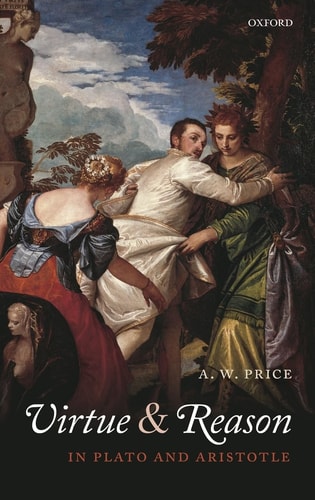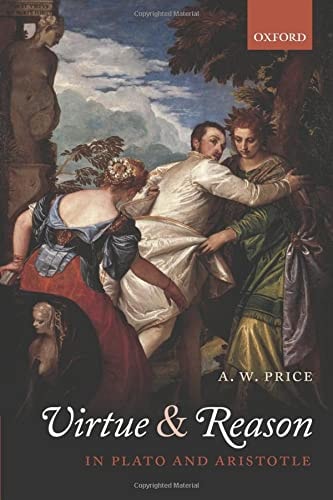
Virtue and Reason in Plato and Aristotle
0
0
As an Amazon Associate and affiliate partner, Menrva Books earns from qualifying purchases. Learn more
Author Description
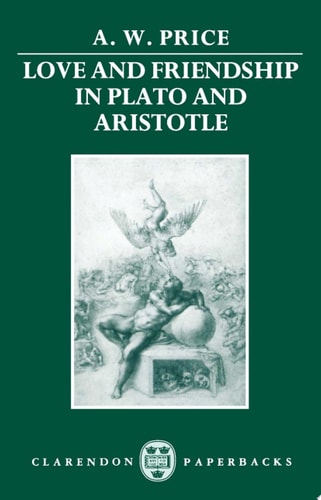
In this authoritative discussion of the philosophy of Plato and Aristotle, A. W. Price considers four related areas: eudaimonia, or living and acting well, as the ultimate end of action; virtues of character in relation to the emotions, and to one another; practical reasoning, especially from an end to ways or means; and acrasia, or action that is contrary to the agent's own judgement of what is best. The focal concept is that of eudaimonia, which both Plato and Aristotle view as an abstract goal that is valuable enough to motivate action. Virtue has a double role to play in making its achievement possible, both in proposing subordinate ends apt to the context, and in protecting the agent against temptations to discard them too easily. For both purposes, Price suggests that virtues need to form a unity--but one that can be conceived in various ways. Among the tasks of deliberation is to work out how, and whether, to pursue some putative end in context. Aristotle returns to early Plato in finding it problematic that one should consciously sacrifice acting well to some incidental attraction; Plato later finds this possible by postulating schism within the soul. Price maintains that it is their emphasis upon the centrality of action within human life that makes the reflections of these ancient philosophers perennially relevant.
Menrva's Summary
THE THESIS
This work investigates the conceptual relationship between virtue, practical reasoning, and the ultimate human end of eudaimonia as articulated in the philosophical systems of Plato and Aristotle. A. W. Price, a scholar of ancient philosophy, examines how these thinkers define the motivation for action and the internal structure of the soul. By analyzing the interplay between character traits and the capacity for rational deliberation, the author argues that the ancient focus on the centrality of action remains a vital framework for understanding human behavior.
THE SCOPE MAP
What You Will Find
- Analysis of eudaimonia as the primary objective of human action
- Examination of the unity of virtues and their role in emotional regulation
- Investigation into the mechanics of practical reasoning and means-end deliberation
- Comparative study of Plato and Aristotle regarding the phenomenon of acrasia
THE AUTHORITY PERSPECTIVE
Scholars and students of classical philosophy frequently identify this text as a rigorous, high-level examination of ancient ethical theory. Experts highlight the author's precise analytical approach to complex metaphysical and psychological concepts within the Platonic and Aristotelian traditions.
Page Count:
370
Publication Date:
2015-03-01
Publisher:
Oxford University Press
ISBN-10:
0198709358
ISBN-13:
9780198709350
Philosophy
Aristotle
Reason
Plato
Ethics