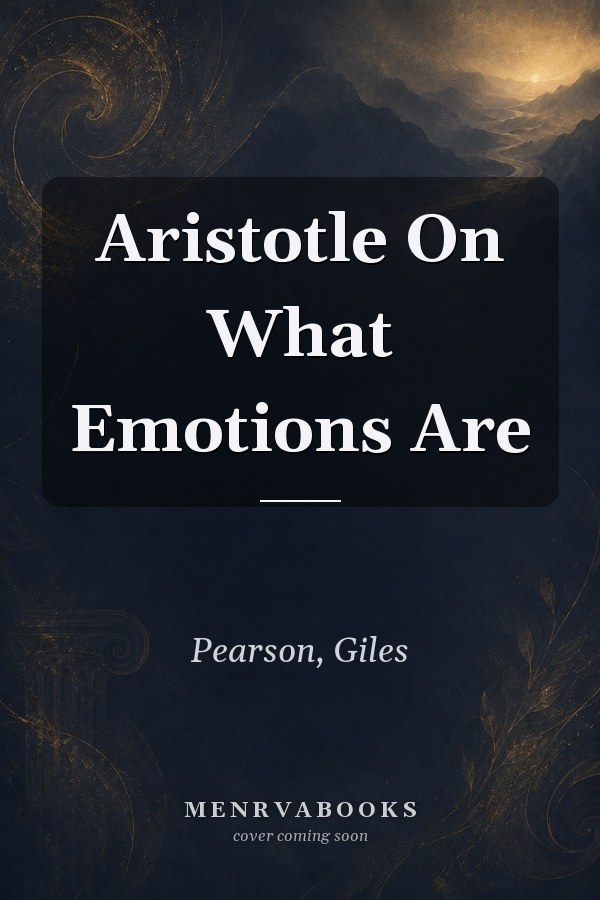
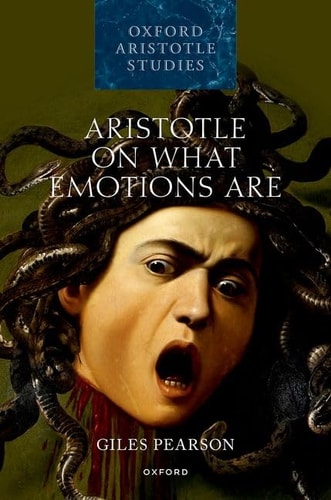
Aristotle On What Emotions Are
0
0
As an Amazon Associate and affiliate partner, Menrva Books earns from qualifying purchases. Learn more
Author Description
Introduction: What This Book Aims To Achieve (and What It Doesn't). A Map -- Some Key Terminology And Distinctions. The Prospects For An Analysis Of Emotions In Terms Of Other Intentional States -- Part I. Emotions As Pleasures And Distresses -- Emotions As Representational Hedonic States -- Pleasure And Distress As Contributing To The Individuation Of Emotion-types -- Emotions As Hedonic States That Are Formed In Response To Intentional States That Apprehend Their Objects -- Emotions And The Account(s) Of Pleasure In The Ethics -- Part Ii. Emotions And Desires -- Anger (orgē) -- Some Other (putative) Links Between Emotions And Desires -- Appetite (epithumia) -- Part Iii. The Material Dimension Of Emotions And Some Problematic Cases -- The Material Or Bodily Dimension Of Emotions -- Some Problematic Cases And The Supplements In The Ee Specification Of The Emotions -- Part Iv. Further Philosophical Considerations And A Significant Philosophical Advantage -- Contrast With A Contemporary Motivational Theory. Which Representational Role(s) Do Emotions Play? -- Explaining Recalcitrant Emotions With Aristotle -- Catalogue Of Aristotle's Emotions As Representational Pleasures Or Distresses. Giles Pearson. Includes Bibliographical References And Index. Electronic Reproduction. Oxford Available Via World Wide Web.
Menrva's Summary
THE THESIS
This book investigates the core question of how Aristotle defines and categorizes emotions within his broader philosophical framework. Giles Pearson, a scholar of ancient philosophy, utilizes a rigorous analysis of Aristotelian texts—specifically the Ethics—to argue that emotions are best understood as representational hedonic states. The work systematically deconstructs the relationship between pleasure, distress, desire, and the bodily dimensions of emotional experience to provide a coherent account of Aristotelian psychology.
THE SCOPE MAP
What You Will Find
- A detailed examination of emotions as representational hedonic states.
- Analysis of the interplay between anger, appetite, and intentional states.
- Investigation into the material and bodily dimensions of emotional responses.
- A comparative study between Aristotelian theory and contemporary motivational theories.
Scope Limits
- The text focuses primarily on Aristotelian definitions and does not provide a comprehensive history of post-Aristotelian emotion theory.
- It does not attempt to resolve all modern psychological debates regarding the nature of emotion.
THE AUTHORITY PERSPECTIVE
Scholars and students of ancient philosophy frequently note the technical precision and academic density of Pearson's prose. Experts highlight this as a significant contribution to the study of Aristotelian ethics and the philosophy of mind.
Page Count:
0
Publication Date:
1900-01-01
Publisher:
Oxford University Press,
ISBN-10:
0191989290
ISBN-13:
9780191989292
Psychology
Philosophy
Aristotle
Philosophy history
Ethics
Community Tags
Other Editions(2)
Similar Books