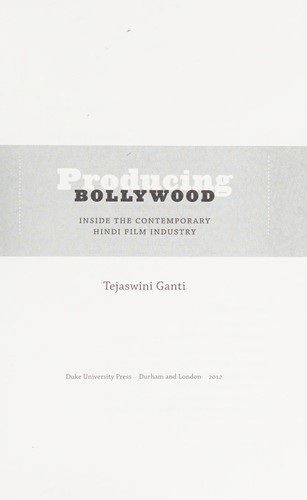
Producing Bollywood
0
0
As an Amazon Associate and affiliate partner, Menrva Books earns from qualifying purchases. Learn more
Author Description
Producing Bollywood offers an unprecedented look inside the social and professional worlds of the Mumbai-based Hindi film industry and explains how it became "Bollywood," the global film phenomenon and potent symbol of India as a rising economic powerhouse. In this rich and entertaining ethnography Tejaswini Ganti examines the changes in Hindi film production from the 1990s until 2010, locating them in Hindi filmmakers' efforts to accrue symbolic capital, social respectability, and professional distinction, and to manage the commercial uncertainties of filmmaking. These efforts have been enabled by the neoliberal restructuring of the Indian state and economy since 1991. This restructuring has dramatically altered the country's media landscape, which quickly expanded to include satellite television and multiplex theaters. Ganti contends that the Hindi film industry's metamorphosis into Bollywood would not have been possible without the rise of neoliberal economic ideals in India. By describing dramatic transformations in the Hindi film industry's production culture, daily practices, and filmmaking ideologies during a decade of tremendous social and economic change in India, Ganti offers valuable new insights into the effects of neoliberalism on cultural production in a postcolonial setting.
Menrva's Summary
THE THESIS
This book investigates the transformation of the Hindi film industry into the global phenomenon known as Bollywood. Tejaswini Ganti, an anthropologist, examines the period from the 1990s to 2010, detailing how filmmakers sought symbolic capital, social respectability, and professional distinction amidst commercial uncertainties. The narrative is framed by the neoliberal restructuring of the Indian state and economy since 1991, which dramatically altered the media landscape with the rise of satellite television and multiplex theaters. Ganti argues that this economic shift was crucial to the industry's metamorphosis into Bollywood, offering insights into neoliberalism's effects on cultural production in a postcolonial context.
THE SCOPE MAP
- An ethnographic examination of the social and professional worlds of the Mumbai-based Hindi film industry.
- Analysis of changes in Hindi film production from the 1990s to 2010.
- Exploration of filmmakers' efforts to accrue symbolic capital, social respectability, and professional distinction.
- Discussion of how neoliberal restructuring of the Indian state and economy since 1991 enabled industry transformation.
- Examination of the expansion of India's media landscape, including satellite television and multiplex theaters.
- Insights into the effects of neoliberalism on cultural production in a postcolonial setting.
THE AUTHORITY PERSPECTIVE
The book is recognized for its unprecedented look inside the social and professional worlds of the Hindi film industry, explaining its rise to global phenomenon status. Scholars have noted its rich and entertaining ethnographic approach, detailing changes in film production and the filmmakers' pursuit of distinction. The analysis is particularly valued for its connection of these transformations to the neoliberal restructuring of India's economy and media landscape. It offers valuable new insights into the effects of neoliberalism on cultural production.
Page Count:
424
Publication Date:
2012-01-01
ISBN-10:
0822352028
ISBN-13:
9780822352020
Business
History
Non-Fiction
Economics
Film Studies
Sociology
India
Community Tags
Similar Books