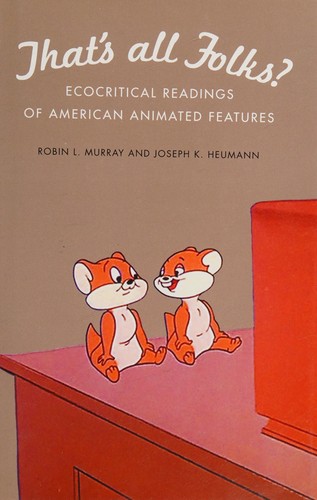
That's All Folks?
0
0
As an Amazon Associate and affiliate partner, Menrva Books earns from qualifying purchases. Learn more
Author Description
Although some credit the environmental movement of the 1970s, with its profound impact on children's television programs and movies, for paving the way for later eco-films, the history of environmental expression in animated film reaches much further back in American history, as That's All Folks? makes clear. Countering the view that the contemporary environmental movement--and the cartoons it influenced--came to life in the 1960s, Robin L. Murray and Joseph K. Heumann reveal how environmentalism was already a growing concern in animated films of the 1930s, 1940s, and 1950s. From Felix the Cat cartoons to Disney's beloved Bambi to Pixar's Wall-E and James Cameron's Avatar, this volume shows how animated features with environmental themes are moneymakers on multiple levels--particularly as broad-based family entertainment and conveyors of consumer products. Only Ralph Bakshi's X-rated Fritz the Cat and R-rated Heavy Traffic and Coonskin, with their violent, dystopic representation of urban environments, avoid this total immersion in an anti-environmental consumer market. Showing us enviro-toons in their cultural and historical contexts, this book offers fresh insights into the changing perceptions of the relationship between humans and the environment and a new understanding of environmental and animated cinema. Examines animated films in the cultural and historical context of environmental movements.
Menrva's Summary
THE THESIS
This book investigates the historical roots and evolution of environmental themes in American animated films, challenging the notion that such expressions began solely with the environmental movement of the 1970s. Robin L. Murray and Joseph K. Heumann argue that environmental concerns were present in animated features as early as the 1930s, predating the widely accepted origins of the modern environmental movement. The authors analyze a range of films, from classic Disney productions like Bambi to contemporary works such as Wall-E and Avatar, demonstrating how these environmentally-themed animations function as successful family entertainment and vehicles for consumer products. The study also contrasts these with darker, urban-focused animations like Fritz the Cat, which offer dystopian views of the environment.
THE SCOPE MAP
- Analysis of environmental themes in animated films from the 1930s to the present.
- Exploration of the commercial viability of eco-themed animated features.
- Examination of the cultural and historical context of environmentalism in animation.
- Case studies including Disney's Bambi, Pixar's Wall-E, and James Cameron's Avatar.
- Discussion of animated films that present anti-environmental or dystopian urban landscapes.
- Re-evaluation of the origins of environmental expression in American animation.
- Insights into changing perceptions of the human-environment relationship.
THE AUTHORITY PERSPECTIVE
The book is recognized for its comprehensive examination of environmental themes within American animated cinema, tracing their origins further back than commonly acknowledged. It highlights how animated films have historically served not only as entertainment but also as platforms for cultural commentary and commercial success. The analysis extends from early animation to modern blockbusters, offering a nuanced perspective on the genre's engagement with ecological concerns. This work provides a valuable contribution to film studies and environmental history by connecting cinematic trends with broader societal shifts.
Page Count:
283
Publication Date:
2011-01-01
ISBN-10:
0803235127
ISBN-13:
9780803235120
History
Art
Non-Fiction
Cultural History
Film Studies
Animation
Community Tags
Similar Books