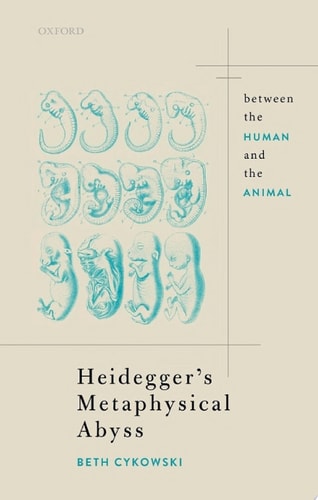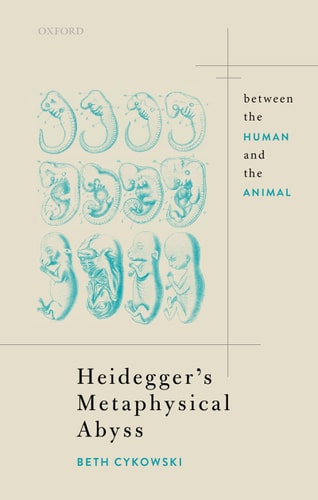
Heidegger's Metaphysical Abyss: Between the Human and the Animal
0
0
As an Amazon Associate and affiliate partner, Menrva Books earns from qualifying purchases. Learn more
Author Description
Heidegger presented reflections on animality most extensively in his 1929-30 lecture course The Fundamental Concepts of Metaphysics. In these lectures, Heidegger poses two provocative metaphysical theses: The human, he claims, is 'world-forming'; in contrast, the animal is 'poor in world.' Contemporary secondary literature has emphatically criticised these theses on account of the objection that they forge an 'abyss of essence' between human and nonhuman organisms. The theses undermine scientific developments by breaking apart the biological continuum in order to secure the human within in its own unique category, all the while leaving the world-poor animal on the other side of the abyss. Heidegger thus reinstates an outmoded dualism that he ought, on his own terms, to renounce: human versus animal. Heidegger's Metaphysical Abyss undertakes a close examination of the lecture course in order to clarify the true meaning, scope, and significance of Heidegger's theses. Drawing on other places within Heidegger's writings where the theme of animality features, Cykowski demonstrates that Heidegger's examination of animality points beyond received dualisms back to a more essential way of philosophising about life and the human's relationship to it. Heidegger thus intended to examine and illuminate, rather than simply to repeat the orthodox metaphysical hierarchies that we have inherited, and his exploration of animality raises deep questions about the status of the human within nature that continue to be important today.
Menrva's Summary
THE THESIS
This book investigates whether Martin Heidegger’s controversial distinction between 'world-forming' humans and 'world-poor' animals constitutes an indefensible dualism or a nuanced philosophical inquiry into the nature of life. Elizabeth Cykowski, a scholar of continental philosophy, analyzes Heidegger’s 1929-30 lecture course, The Fundamental Concepts of Metaphysics, to reconcile his claims with contemporary biological and ethical standards. By situating these lectures within the broader corpus of Heidegger’s work, Cykowski argues that his intent was not to reinforce traditional hierarchies but to challenge the fundamental ways in which humanity understands its position within the natural order.
THE SCOPE MAP
What You Will Find
- A detailed textual analysis of Heidegger’s 1929-30 lecture course, The Fundamental Concepts of Metaphysics.
- A critical examination of the 'world-forming' versus 'world-poor' metaphysical framework.
- A synthesis of Heidegger’s scattered writings on animality to identify consistent philosophical threads.
- A reassessment of the human-animal divide in the context of modern biological and evolutionary science.
THE AUTHORITY PERSPECTIVE
Scholars in the field of phenomenology and animal studies recognize this text as a rigorous attempt to move beyond simplistic critiques of Heidegger’s anthropocentrism. Readers frequently note the academic density of the prose, which requires a foundational understanding of Heideggerian terminology to fully grasp the author's arguments.
Page Count:
208
Publication Date:
2021-04-04
Publisher:
Oxford University Press
ISBN-10:
0198865406
ISBN-13:
9780198865407
Philosophy
Phenomenology
Continental Philosophy
Metaphysics
Animal Studies