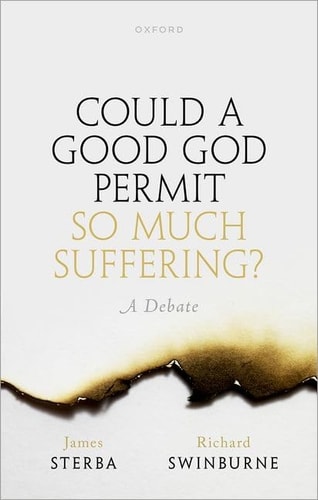
Could a Good God Permit So Much Suffering?: A Debate
0
0
As an Amazon Associate and affiliate partner, Menrva Books earns from qualifying purchases. Learn more
Author Description
Could a Good God Permit So Much Suffering? presents a debate over whether the degree and amount of moral evil that actually exists in our world is logically incompatible with the existence of the all-good, all-powerful God of traditional theism. James Sterba puts the case in favour of this proposition, on the basis that the evils of the world are so horrendous that their occurrence violates principles requiring the prevention of moral evil, conclusively showing the non-existence of an omnipotent and perfectly good God. In reply, Richard Swinburne argues that our major benefactors, parents and the State, have rights to permit us to suffer if doing so is necessary to secure some good for ourselves or others. Therefore, Swinburne claims, as so much greater a benefactor than are parents and the State, it follows that God has a far greater right to allow suffering to a high degree if allowing such suffering is the only logically possible way for God to secure some very great goods for ourselves or others. Further responses from both Sterba and Swinburne continue the debate, ensuring that all lines of argument are thoroughly explored.
Menrva's Summary
THE THESIS
This book investigates whether the existence of significant moral and natural evil is logically compatible with the traditional theistic concept of an all-good, all-powerful God. James P. Sterba and Richard Swinburne, both established scholars in the philosophy of religion, utilize formal logical argumentation to address the problem of evil. The text presents a structured exchange where Sterba argues that the scale of suffering renders the existence of such a deity impossible, while Swinburne defends theism by positing that God may permit suffering to secure greater goods, drawing analogies to the rights of human benefactors.
THE SCOPE MAP
What You Will Find
- Logical analysis of the problem of evil
- Comparative ethical frameworks regarding the permission of suffering
- Counter-arguments concerning divine rights and human autonomy
Scope Limits
- The text does not provide a comprehensive history of theodicy
- It does not address non-theistic or Eastern religious perspectives on suffering
THE AUTHORITY PERSPECTIVE
Scholars and students of philosophy frequently cite this work as a clear, high-level representation of contemporary analytic debate on theodicy. The text is noted for its rigorous logical structure, making it a standard resource for those examining the intersection of ethics and classical theism.
Page Count:
160
Publication Date:
2024-01-01
Publisher:
Oxford University Press
ISBN-10:
0192848542
ISBN-13:
9780192848543
Politics
Philosophy
Religion
Theology
Ethics
Apologetics
Ethics & Morality
Community Tags
Similar Books