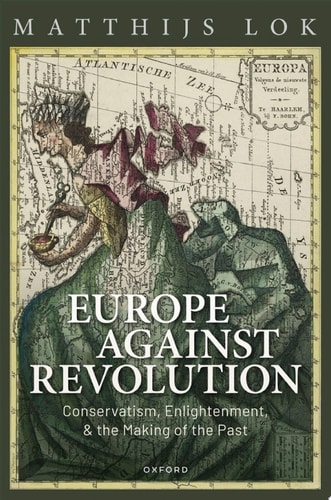
Europe against Revolution: Conservatism, Enlightenment, and the Making of the Past
0
0
As an Amazon Associate and affiliate partner, Menrva Books earns from qualifying purchases. Learn more
Author Description
Contemporary Europe seems to be divided between progressive cosmopolitans sympathetic to the European Union and the ideals of the Enlightenment, and counter-enlightened conservative nationalists extolling the virtues of homelands threatened by globalised elites and mass migration. This study seeks to uncover the roots of historically informed ideas of Europe, while at the same time underlining the fundamental differences between the writings of the older counter-revolutionary Europeanists and their self-appointed successors and detractors in the twenty-first century. In the decades around 1800, the era of the French Revolution, counter-revolutionary authors from all over Europe defended European civilisation against the onslaught of nationalist revolutionaries, bent on the destruction of the existing order, or so they believed. In opposition to the new revolutionary world of universal and abstract principles, the counter-revolutionary publicists proclaimed the concept of a gradually developing European society and political order, founded on a set of historical and - ultimately divine - institutions that had guaranteed Europe's unique freedom, moderation, diversity, and progress since the fall of the Roman Empire. These counter-revolutionary Europeanists drew on the cosmopolitan Enlightenment and simultaneously criticized its alleged revolutionary legacy. Throughout the nineteenth and twentieth centuries, these ideas of European history and civilisation were rediscovered and adapted to new political contexts, shaping in manifold ways our contested idea of European history and memory until today.
Menrva's Summary
THE THESIS
This study investigates the intellectual origins of counter-revolutionary thought in Europe and how these historical perspectives continue to shape contemporary political divisions. Matthijs Lok, a scholar of European history, examines the writings of early nineteenth-century publicists who opposed the French Revolution. By analyzing their defense of a historically grounded European order against abstract revolutionary principles, the author provides a framework for understanding the evolution of conservative Europeanism from the post-Napoleonic era to the present day.
THE SCOPE MAP
What You Will Find
- Analysis of counter-revolutionary political thought during the era of the French Revolution.
- Examination of the tension between Enlightenment universalism and historical institutionalism.
- Comparative study of nineteenth-century Europeanist rhetoric and its modern-day political echoes.
- Historical investigation into the development of concepts regarding European freedom, diversity, and progress.
THE AUTHORITY PERSPECTIVE
Experts recognize this work as a significant contribution to the intellectual history of European conservatism. Readers frequently note the academic density of the prose and the author's meticulous tracing of political ideas across two centuries.
Page Count:
376
Publication Date:
2023-01-01
Publisher:
OUP Oxford
ISBN-10:
0198872151
ISBN-13:
9780198872153
Philosophy
History
European History
Conservatism
Intellectual History
Community Tags
Similar Books