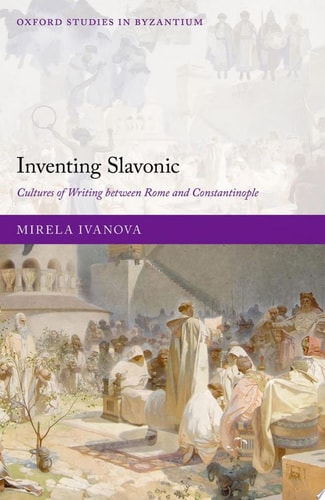
Inventing Slavonic: Cultures of Writing Between Rome and Constantinople
0
0
As an Amazon Associate and affiliate partner, Menrva Books earns from qualifying purchases. Learn more
Author Description
Few alphabets in the world are actively celebrated, and none more so than the Slavonic. Annually across Eastern Europe, the alphabet and its inventors, Cyril and Methodios, are celebrated with parades, concerts, liturgical services, and public addresses by presidents, ministers, and mayors. Inventing Slavonic: Cultures of Writing Between Rome and Constantinople offers a new reading of the invention of the Slavonic alphabet and its implications. Its premise is simple: namely, that the alphabet was not invented once, but that it continued to be contested and redefined in the century after its creation. However, Inventing Slavonic goes against the grain of modern scholarship and popular common sense, where a stable and fossilized story about Cyril, his brother and companion Methodios, and the alphabet still persists.Mirela Ivanova shows that this well-known story is, in fact, a Frankenstein's monster, bolted together from texts which originally attributed quite different and often conflicting meanings to the elements which make up this supposedly unified narrative. In this narrative's place, the book offers a series of new readings of our earliest sources for the alphabet's appearance. In doing so, it constructs a new social history of the early script's fragility, and the ways in which its existence was conditioned by changes in socio-political life between Rome and Constantinople.
Menrva's Summary
THE THESIS
This book investigates the historical origins and subsequent evolution of the Slavonic alphabet, challenging the traditional narrative of its singular, static invention. Mirela Ivanova, a specialist in Byzantine and Slavic history, utilizes a critical re-examination of primary source texts to argue that the alphabet was a contested and fluid cultural project. By analyzing the socio-political tensions between Rome and Constantinople, the author demonstrates how the script was repeatedly redefined during the century following its initial creation.
THE SCOPE MAP
What You Will Find
- A critical analysis of early medieval primary sources regarding the Cyrillo-Methodian mission.
- A social history framework examining the fragility of early writing systems.
- An exploration of the geopolitical influence exerted by the Roman and Byzantine empires on linguistic development.
- A deconstruction of the modern, unified myth surrounding the invention of the Slavonic script.
THE AUTHORITY PERSPECTIVE
Scholars in the field of Byzantine and medieval studies recognize this work as a significant intervention that complicates established historiography. Readers frequently note the academic density of the prose and the author's rigorous approach to textual analysis.
Page Count:
304
Publication Date:
2024-01-01
Publisher:
Oxford University Press
ISBN-10:
0198891504
ISBN-13:
9780198891505
History
Slavic Studies
Linguistics
Cultural History
Byzantine History
Community Tags
Similar Books