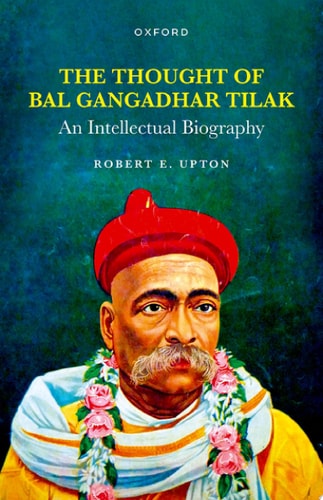
The Thought of Bal Gangadhar Tilak: An Intellectual Biography
0
0
As an Amazon Associate and affiliate partner, Menrva Books earns from qualifying purchases. Learn more
Author Description
This work is a systematic study of Bal Gangadhar Tilak's thought, focusing on his views on 'communal' relations within the Indian polity, on caste and reform in Hindu society, and on political ethics regarding violence and non-cooperation. The Thought of Bal Gangadhar Tilak adopts a contextualist approach, situating his ideas in local Maharashtrian as well as pan-Indian and global cultural-intellectual contexts. The approach blends Tilak's quotidian journalism and speeches alongside his canonical texts on Aryan history and on the Bhagavad Gita. The work marks a departure from current interpretations, emphatically arguing that he is misappropriated and/or misunderstood as a proto-Hindutva thinker. Instead, he is revealed to be a radical liberal who supports counter-autocratic violence, a majoritarian pluralist in terms of intercommunity relations, a self-strengthening reformer focused on masculinity, committed to reshaping India for the challenges of modernity― something fused in his thought with a resilient Brahmin supremacism. This book lays emphasis on his remarkable recognition as the nation's 'founding father' and particularly demonstrates how his appropriation by Gandhi was in turn contested by those emphasising Tilak's embrace of violence, particularly in the crucial mid-1920s period when he was indelibly linked to re-emerging Hindutva. More recently, growing ahistorical demi-official insistence on his social progressivism illustrates a change in India's public culture, as does the use of popular or even legal pressure to de-legitimize perennial criticism of Tilak's socio-political positions.
Menrva's Summary
THE THESIS
This work investigates the core question of how Bal Gangadhar Tilak’s political and social philosophy has been historically misinterpreted and misappropriated within the context of modern Indian identity. Robert E. Upton utilizes a contextualist methodology to analyze Tilak’s extensive body of work, ranging from daily journalism and public speeches to his scholarly treatises on the Bhagavad Gita and Aryan history. By situating Tilak within both local Maharashtrian and broader global intellectual frameworks, the author argues that Tilak was a radical liberal and majoritarian pluralist rather than a proto-Hindutva figure. The text systematically deconstructs contemporary narratives to reveal the complexities of Tilak’s views on caste, political violence, and the challenges of modernity.
THE SCOPE MAP
What You Will Find
- Analysis of Tilak’s political ethics regarding non-cooperation and the use of counter-autocratic violence.
- Examination of Tilak’s stance on caste reform and his specific focus on masculinity as a tool for national self-strengthening.
- A comparative study of Tilak’s reception, contrasting his historical reality with his subsequent appropriation by Gandhi and modern political movements.
- A critical review of how public culture and legal pressures have influenced the contemporary perception of Tilak’s socio-political legacy.
THE AUTHORITY PERSPECTIVE
Scholars and historians recognize this work as a rigorous intervention in the study of Indian political thought that challenges established nationalist historiography. Readers frequently note the academic density of the prose and the author's meticulous attention to primary source material.
Page Count:
328
Publication Date:
2024-01-01
Publisher:
Oxford University Press
ISBN-10:
0198900651
ISBN-13:
9780198900658
History
Biography
Politics
Philosophy
Historical
Asia
India
Asian History
Nationalism
World politics
Specific Topics
Community Tags
Similar Books