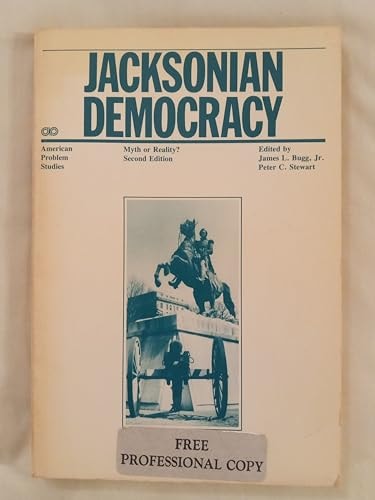
Jacksonian Democracy
0
0
As an Amazon Associate and affiliate partner, Menrva Books earns from qualifying purchases. Learn more
Author Description
A close look at the tumultuous times in United States history named for its seventh president, Andrew Jackson, from a variety of viewpoints. This volatile political leader and war hero, though controversial, was the first president not born into the gentry, whose rise to power coincided with the growth of the "new" democracy. Focuses on two major internal problems, the Nullification Crisis and the Bank War; and also looks at related matters. Originally published by the Dryden Press in 1976.
Menrva's Summary
THE THESIS
This work investigates the political and social transformation of the United States during the era of Andrew Jackson, questioning how his presidency reshaped democratic participation and federal authority. James L. Bugg synthesizes historical perspectives to examine the rise of the seventh president, a figure who emerged from outside the traditional gentry class. The text analyzes how Jackson's leadership style and policy decisions reflected the broader shift toward a more populist political framework in early 19th-century America.
THE SCOPE MAP
What You Will Find
- Analysis of the Nullification Crisis and its impact on federal-state relations
- Examination of the Bank War and its role in shaping economic policy
- Overview of the socio-political climate surrounding the growth of the new democracy
Scope Limits
- Does not provide an exhaustive biography of Andrew Jackson's entire life
- Focuses primarily on political and institutional conflicts rather than social or cultural history
THE AUTHORITY PERSPECTIVE
Historians and students of American political history recognize this text as a focused examination of the Jacksonian period's central institutional conflicts. Readers frequently note the concise nature of the analysis, which makes it a useful resource for understanding the specific political tensions of the 1830s.
Page Count:
166
Publication Date:
1976-01-01
Publisher:
Dryden Press
ISBN-10:
0030141516
ISBN-13:
9780030141515
Biography
History
United States
19th Century