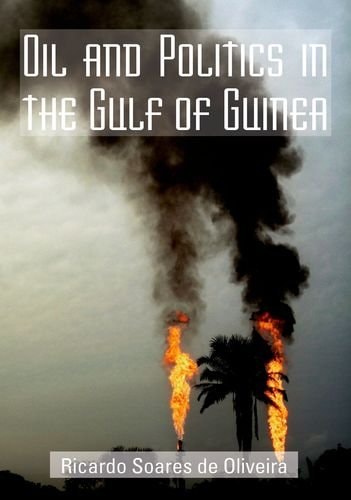
Oil and Politics in the Gulf of Guinea
0
0
As an Amazon Associate and affiliate partner, Menrva Books earns from qualifying purchases. Learn more
Author Description
This book investigates the paradox at the heart of present-day Gulf of Guinea politics. The governance crisis festering throughout every one of the region's states ought to discourage outsiders from capital-intensive, long-term commercial involvement and cast doubts over the political survival of ruling cliques. However, the presence of large petroleum deposits radically changes this equation: the negative dynamics of state failure and widespread violence affect the general population but spare the oil nexus. The material and political resources made available by oil allow states to survive regardless of bad policies, facilitate their governing elites' material success regardless of reckless management, earn international allies regardless of erratic domestic conduct, and make companies want to invest regardless of risk. The recent oil boom only strengthens this paradoxical viability. Making possible what is arguably the largest inflow of resources into Africa in history, it is of a different order from the short-term viability afforded by the exploitation of other natural resources. Nonetheless, the partnership between insiders and outsiders that permits the extraction of oil is not conducive to positive long-term outcomes in institution-building or broad-based economic growth. Highly dependent on uninterrupted money flows and beset by various destabilising trends, the political economy of oil in the Gulf of Guinea is poised in a state of "permanent crisis." This study, based on extensive fieldwork, interviews and engagement with primary and secondary sources, is the first on the subject to take on the regional, as opposed to the country-specific, dimension. It has four key aims. The first is to bring out the extent to which oil has forged the interaction of the region with the world economy and how the ongoing expansion of the oil sector will deepen this pivotal role. Secondly, how this international relevance of petroleum has shaped postcolonial domestic politics
Menrva's Summary
THE THESIS
This book investigates the paradox of how the Gulf of Guinea maintains political and economic viability despite systemic governance failures and state instability fueled by the oil industry. Ricardo Soares de Oliveira, a scholar specializing in African politics, utilizes extensive fieldwork and primary source analysis to argue that petroleum wealth creates a unique "permanent crisis" where ruling elites and international corporations sustain a profitable, yet destructive, status quo. The study moves beyond individual country analysis to provide a comprehensive regional framework for understanding the political economy of oil extraction in postcolonial Africa.
THE SCOPE MAP
What You Will Find
- Analysis of the regional political economy across Gulf of Guinea states.
- Examination of the symbiotic relationship between local ruling elites and international oil corporations.
- Evidence derived from extensive fieldwork, interviews, and primary documentation.
- Investigation into how oil wealth decouples state survival from effective governance or economic development.
THE AUTHORITY PERSPECTIVE
Experts recognize this work as a foundational text for understanding the intersection of resource extraction and political stability in West Africa. Readers frequently note the academic rigor and the clarity with which the author dissects the complex, often counter-intuitive dynamics of the regional oil sector.
Page Count:
320
Publication Date:
2007-11-22
Publisher:
Oxford University Press
ISBN-10:
0199326444
ISBN-13:
9780199326440
Politics
Economics
International relations
World politics
Energy policy
Community Tags
Other Editions(2)

Similar Books
Reader Comments
Share Your Thoughts
No comments yet. Be the first to share your thoughts!