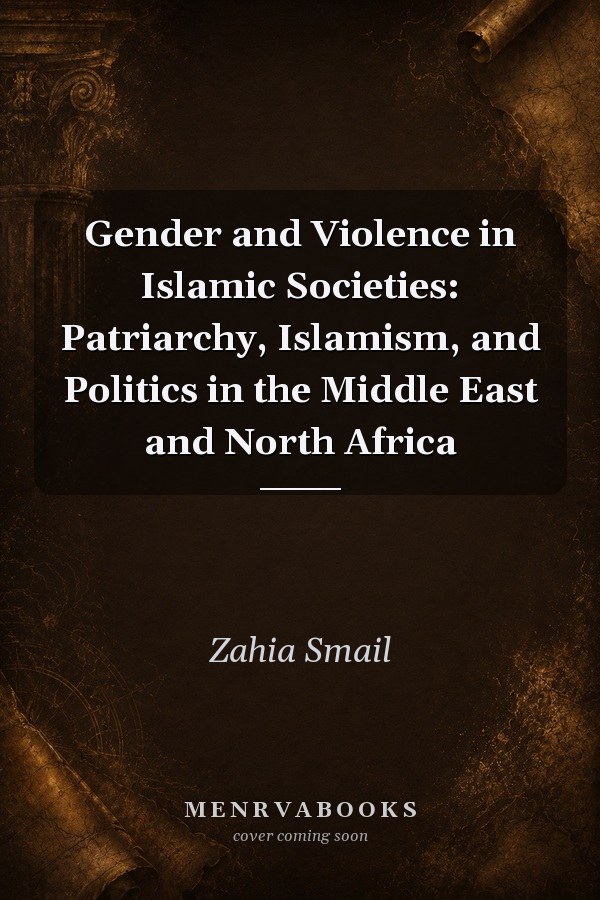
Gender and Violence in Islamic Societies: Patriarchy, Islamism, and Politics in the Middle East and North Africa
0
0
As an Amazon Associate and affiliate partner, Menrva Books earns from qualifying purchases. Learn more
Author Description
As a result of the revolutions and movements of resistance that spread across the Middle East and North Africa after 2011, the issue of public violence by the state against both men and women dominated the headlines. But gender-based violence, in both its public and private forms, has for the most part remained unnoticed and is often ignored. The forms that this kind of violence can take are influenced by cultural norms and religious beliefs, as well as economic and political circumstances. Here, Zahia Smail Salhi brings together a wide range of examples of gender-based violence across the Middle East and North Africa, from working environments in Jordan to domestic abuse in Egypt, and from verbal violence against women in Tunisia and Algeria to analysis of violence against underage girl domestic workers in Morocco. The evidence demonstrates that the violence, far from being of universal character across the region, is instead diverse, in both its intensity and in the processes of addressing such violence. -- Provided by publisher.
Menrva's Summary
THE THESIS
The book investigates the pervasive yet often overlooked issue of gender-based violence within Islamic societies, examining its intersection with patriarchy, Islamism, and political structures in the Middle East and North Africa. It analyzes how cultural norms, religious beliefs, and socio-economic conditions shape diverse forms of gendered violence, ranging from workplace harassment to domestic abuse and the exploitation of underage workers. The work challenges monolithic views by demonstrating the varied manifestations and responses to such violence across the region.
THE SCOPE MAP
- Case studies of gender-based violence in Jordan, Egypt, Tunisia, Algeria, and Morocco.
- Analysis of public and private forms of gendered violence.
- Exploration of the influence of cultural norms, religious beliefs, economic, and political circumstances.
- Examination of violence against women in working environments and domestic settings.
- Discussion of verbal violence and the exploitation of underage girl domestic workers.
- Comparative analysis of the diversity in intensity and addressing of gender-based violence across the region.
THE AUTHORITY PERSPECTIVE
The book offers a critical examination of gender-based violence in Islamic societies, highlighting its complex interplay with political and religious contexts. By presenting a range of case studies from across the Middle East and North Africa, it underscores the diverse nature of this violence and the varied approaches to addressing it. The work serves as an important contribution to understanding the socio-political dimensions of gender inequality in the region.
Page Count:
286
Publication Date:
2013-01-01
ISBN-10:
1780765304
ISBN-13:
9781780765303
History
Non-Fiction
Politics
Religion
Sociology
Gender Studies
North African Studies
Islam
Community Tags
Similar Books