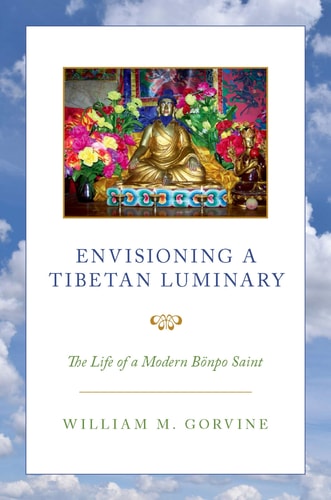
Envisioning a Tibetan Luminary: The Life of a Modern Bönpo Saint
0
0
As an Amazon Associate and affiliate partner, Menrva Books earns from qualifying purchases. Learn more
Author Description
Envisioning a Tibetan Luminary examines the religious biography of Shardza Tashi Gyaltsen (1859-1934), the most significant modern figure representing the Tibetan Bön religion-a vital minority tradition that is underrepresented in Tibetan studies. The work is based on fieldwork conducted in eastern Tibet and in the Bön exile community in India, where traditional Tibetan scholars collaborated closely on the project. Utilizing close readings of two versions of Shardza's life-story, along with oral history collected in Bön communities, this book presents and interprets the biographical image of this major figure, culminating with an English translation of his life story.William M. Gorvine argues that the disciple-biographer's literary portrait not only enacts and shapes religious ideals to foster faith among its readership, but also attempts to quell tensions that had developed among his original audience. Among the Bön community today, Shardza Tashi Gyaltsen has come to be unequivocally revered for an impressive textual legacy and a saintly death. During his lifetime, however, he faced prominent critics within his own lineage who went so far as to issue polemical attacks against him. As Gorvine shows, the biographical texts that inform us about Shardza's life are best understood when read on multiple registers, with attention given to the ways in which the religious ideals on display reflect the broader literary, cultural, and historical contexts within which they were envisioned and articulated.
Menrva's Summary
THE THESIS
This work investigates how the biographical portrait of the Bönpo saint Shardza Tashi Gyaltsen functions as both a religious ideal and a tool for navigating internal sectarian tensions. William M. Gorvine, a scholar of Tibetan religious traditions, utilizes a combination of textual analysis and ethnographic fieldwork to examine the life of this influential 19th-century figure. By comparing multiple versions of Shardza's life story alongside oral histories from Bön communities, Gorvine argues that these texts were crafted to consolidate authority and reconcile conflicting factions within the lineage. The study provides a framework for understanding how hagiography serves as a dynamic instrument for community identity and theological preservation.
THE SCOPE MAP
What You Will Find
- A detailed examination of the life and legacy of Shardza Tashi Gyaltsen (1859-1934).
- Analysis of the Bön religion as a minority tradition within the broader context of Tibetan studies.
- Methodological integration of close textual readings and contemporary oral history from exile communities in India.
- Exploration of the polemical tensions and internal critiques present during the saint's lifetime.
THE AUTHORITY PERSPECTIVE
Scholars in the field of Tibetan studies recognize this work as a significant contribution to the study of the Bön tradition, which has historically received less academic attention than other Tibetan schools. Experts highlight the book's rigorous approach to hagiography and its ability to contextualize religious narratives within their specific historical and social environments.
Page Count:
328
Publication Date:
2019-01-03
Publisher:
Oxford University Press
ISBN-10:
0199362351
ISBN-13:
9780199362356
History
Biography
Religion
Tibet China
Buddhism
Community Tags
Other Editions(3)
Similar Books