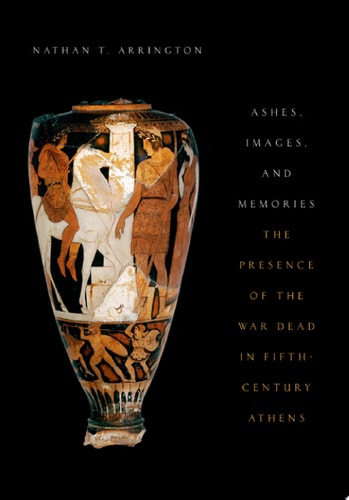
Ashes, Images, and Memories: The Presence of the War Dead in Fifth-Century Athens
0
0
As an Amazon Associate and affiliate partner, Menrva Books earns from qualifying purchases. Learn more
Author Description
Ashes, Images, and Memories argues that the institution of public burial for the war dead and images of the deceased in civic and sacred spaces fundamentally changed how people conceived of military casualties in fifth-century Athens. In a period characterized by war and the threat of civil strife, the nascent democracy claimed the fallen for the city and commemorated them with rituals and images that shaped a civic ideology of struggle and self-sacrifice on behalf of a unified community.While most studies of Athenian public burial have focused on discrete aspects of the institution, such as the funeral oration, this book broadens the scope. It examines the presence of the war dead in cemeteries, civic and sacred spaces, the home, and the mind, and underscores the role of material culture - from casualty lists to white-ground lekythoi-in mediating that presence. This approach reveals that public rites and monuments shaped memories of the war dead at the collective and individual levels, spurring private commemorations that both engaged with and critiqued the new ideals and the city's claims to the body of the warrior. Faced with a collective notion of "the fallen" families asserted the qualities, virtues, and family links of the individual deceased, and sought to recover opportunities for private commemoration and personal remembrance. Contestation over the presence and memory of the dead often followed class lines, with the elite claiming service and leadership to the community while at the same time reviving Archaic and aristocratic commemorative discourses. Although Classical Greek art tends to be viewed as a monolithic if evolving whole, this book depicts a fragmented and charged visual world.
Menrva's Summary
THE THESIS
This book investigates how the institutionalization of public burial and commemorative imagery in fifth-century Athens transformed the civic perception and memory of military casualties. Nathan T. Arrington, an expert in classical art and archaeology, synthesizes archaeological evidence, epigraphy, and historical texts to argue that the Athenian state utilized material culture to construct a unified ideology of sacrifice. By examining the tension between state-mandated public mourning and the persistent desire for private, familial remembrance, the author demonstrates how the war dead became central to the political and social identity of the nascent democracy.
THE SCOPE MAP
What You Will Find
- Analysis of Athenian public burial institutions and their evolution during the fifth century.
- Examination of diverse material culture including casualty lists, white-ground lekythoi, and civic monuments.
- Investigation into the intersection of class, aristocratic discourse, and democratic ideology regarding the dead.
- A framework for understanding how visual and ritual practices mediated the presence of the fallen in both public and private spheres.
THE AUTHORITY PERSPECTIVE
Scholars and historians recognize this work as a significant contribution to the study of Athenian funerary practices and the political utility of memory. Readers frequently note the academic density of the prose and the author's meticulous integration of visual art with historical analysis.
Page Count:
360
Publication Date:
2014-12-18
Publisher:
Oxford University Press
ISBN-10:
0199369070
ISBN-13:
9780199369072
History
Art History
War Memorials
Burial
Archaeology
Ancient History
Social History
Greece
Athens Greece
Community Tags
Other Editions(2)

Similar Books