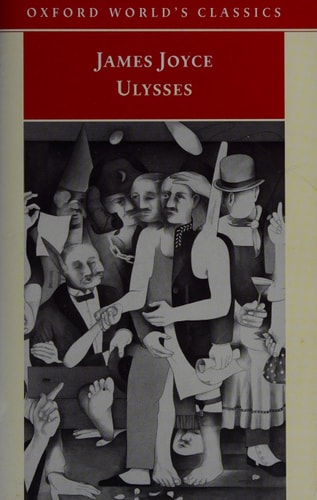
Ulysses
0
0
As an Amazon Associate and affiliate partner, Menrva Books earns from qualifying purchases. Learn more
Author Description
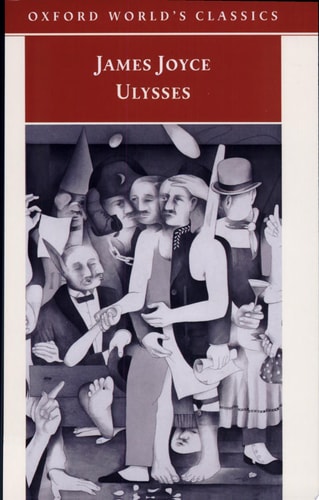
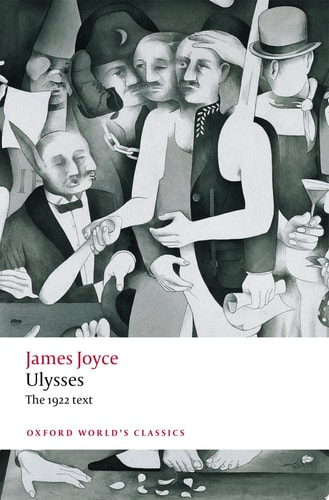
One of the greatest novels of the twentieth century, Ulysses has had a profound influence on modern fiction. In a series of episodes covering the course of a single day, June 16, 1904, the novel traces the movements of Leopold Bloom and Stephen Dedalus through the streets of Dublin. Each chapter has its own remarkably innovative literary style, and the book is one of the great, extended tours de force of stream-of-consciousness narration. It is an essential stop in any tour of English literature.This marvelous edition reproduces in facsimile the original 1922 text. Today critical interest centers on the authority of the text, and this edition republishes for the first time, without interference, the original 1922 text. Equally important, Jeri Johnson's editorial material is acknowledged to be by far the best there is. Her textual apparatus--notes, introduction, stemma of published versions--is unsurpassed. Johnson strikes the perfect balance between what readers need to know in her notes and introduction. Her fantastic explanatory notes begin by giving the time and location of each episode and a description of the correspondence with the episode in Homer being paralleled. In addition, the introduction is a model of scholarship and lucidity, leading the first-time reader through the intricacies of the text.This edition also includes a full list of errata, a Composition and Publication History, an up-to-date bibliography, a chronology of Joyce's lie, a map of Dublin of the period, appendices reproducing Gilbert and Linati schema (i.e. the tables that set out the symbolic significance of each episode in the novel by title, hour of the day, place of the action), and much more. It is the perfect introduction to the crowning work of modernist literature.
Menrva's Summary
THE PULSE
The narrative follows the mundane yet complex movements of Leopold Bloom and Stephen Dedalus across Dublin during a single day, June 16, 1904. The protagonist, Leopold Bloom, navigates the city while contending with personal grief, professional uncertainty, and the social fabric of early twentieth-century Ireland. His path intermittently intersects with that of Stephen Dedalus, a young intellectual grappling with his own artistic and existential crises. The narrative framework employs a non-linear, multi-perspective approach, utilizing shifting styles to mirror the internal states of the characters and the external environment of the city.
INSIDE THE PAGES
- Extensive use of stream-of-consciousness narration to capture internal monologue.
- Episodic structure mirroring the events of Homer's Odyssey.
- Radical shifts in literary style and tone between individual chapters.
- Detailed, geographically accurate depiction of early 1900s Dublin.
- Incorporation of complex linguistic play, puns, and allusions.
- Integration of diverse narrative modes including dramatic script and journalistic prose.
- Exploration of themes regarding fatherhood, identity, and cultural history.
- Dense, multi-layered symbolism embedded within everyday occurrences.
THE COLLECTIVE ECHO
Readers and critics frequently highlight the immense technical ambition of the work, noting its status as a foundational text for modernist literature. Discussion often centers on the difficulty of the prose, which demands significant attention to detail and historical context. Many observers emphasize the effectiveness of the stream-of-consciousness technique in creating a vivid, immersive atmosphere that transcends traditional storytelling. While some find the density of the text challenging, others argue that the structural complexity provides a rewarding experience for those who engage with its layers. The work remains a primary subject of academic analysis regarding the evolution of the novel form.
Page Count:
1056
Publication Date:
2011-09-01
Publisher:
Oxford University Press
ISBN-10:
0199535671
ISBN-13:
9780199535675
Literary Fiction
Fiction psychological
Artists fiction
Married People
Stephen Dedalus Fictitious character
Bloom leopold fictitious character fiction
classic
Modernist
Friendship
Bloom molly fictitious character fiction
Dublin Ireland
Experimental