
Jacob's Room
0
0
As an Amazon Associate and affiliate partner, Menrva Books earns from qualifying purchases. Learn more
Author Description
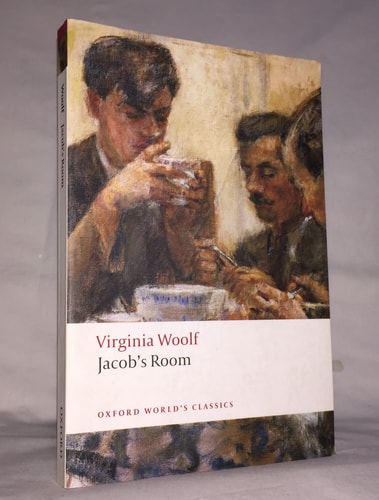
Jacob's Room is Virginia Woolf's first truly experimental novel. It is a portrait of a young man, who is both representative and victim of the social values which led Edwardian society into war. Jacob's life is traced from the time he is a small boy playing on the beach, through his years in Cambridge, then in artistic London, and finally making a trip to Greece, but this is no orthodox Bildungsroman. Jacob is presented in glimpses, in fragments, as Woolf breaks down traditional ways of representing character and experience. The novel's composition coincided with the consolidation of Woolf's interest in feminism, and she criticizes the privileged thoughtless smugness of patriarchy, `the other side', `the men in clubs and Cabinets'. Her stylistic innovations are conscious attempts to realize and develop women's writing and the novel dramatizes her interest in the ways both language and social environments shape differently the lives of men and women. ABOUT THE SERIES: For over 100 years Oxford World's Classics has made available the widest range of literature from around the globe. Each affordable volume reflects Oxford's commitment to scholarship, providing the most accurate text plus a wealth of other valuable features, including expert introductions by leading authorities, helpful notes to clarify the text, up-to-date bibliographies for further study, and much more.
Menrva's Summary
THE PULSE
The narrative follows the life of Jacob Flanders, a young man whose existence is revealed through the fragmented perceptions of those around him rather than a traditional linear biography. Jacob moves from a childhood on the Cornish coast to his academic years at Cambridge and his eventual entry into the social circles of London and Greece. The narrative framework rejects the conventional omniscient perspective, instead utilizing a series of impressions, letters, and observations to construct his character. Jacob remains an elusive figure, defined by the social structures and gendered expectations of Edwardian society. The text functions as a critique of the patriarchal systems that ultimately lead to the devastation of the First World War.
INSIDE THE PAGES
- Stream of consciousness narrative technique
- Non-linear chronological structure
- Impressionistic character development
- Focus on the limitations of language in representing identity
- Critique of Edwardian social and patriarchal norms
- Use of shifting perspectives and external observations
- Minimalist plot progression
- Exploration of the intersection between personal experience and historical context
THE COLLECTIVE ECHO
Readers and critics frequently identify this work as a pivotal moment in the development of modernist prose. Discussion often centers on the effectiveness of Woolf's experimental style in capturing the ephemeral nature of human identity. Many highlight the contrast between the protagonist's internal life and the external social forces that shape his trajectory. The text is often analyzed for its feminist undercurrents and its refusal to adhere to the structures of the traditional Bildungsroman. Scholars emphasize the importance of this novel as a precursor to the more complex narrative techniques found in Woolf's later works.
Page Count:
320
Publication Date:
2008-01-01
Publisher:
OUP Oxford
ISBN-10:
0191505854
ISBN-13:
9780191505850
Literary Fiction
classic
English literature
English & College Success
British literature
English
Experimental
England
Modernist
Community Tags
Other Editions(11)






Similar Books





Reader Comments
Share Your Thoughts
No comments yet. Be the first to share your thoughts!