Homer and the Odyssey
0
0
As an Amazon Associate and affiliate partner, Menrva Books earns from qualifying purchases. Learn more
Author Description
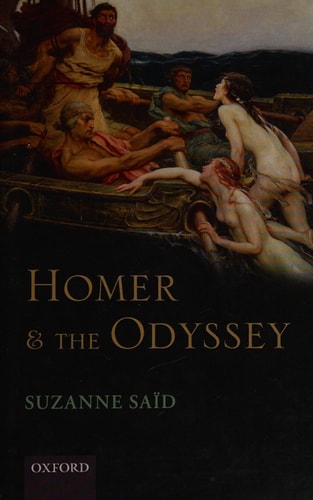
Who was Homer? This book takes us beyond the legends of the blind bard or the wandering poet to explore an author about whom nothing is known, except for his works. It offers a reading of the ancient biographies as clues to the reception of the Homeric poems in Antiquity and provides an introduction to the oral tradition which lay at the source of the Homeric epics. Above all, it takes us into the world of the Odyssey, a world that lies between history and fiction. It guides the reader through a poem which rivals the modern novel in its complexity, demonstrating the unity of the poem as a whole. It defines the many and varied figures of otherness by which the Greeks of the archaic period defined themselves and underlines the values promoted by the poem's depictions of men, women, and gods. Finally, it asks why, throughout the centuries from Homer to Kazantzakis and Joyce, the hero who never forgets his homeland and dreams constantly of return has never ceased to be the incarnation of what it is to be human.This translation is a revised and much expanded version of the original French text, and includes a new chapter on the representation of women in the Odyssey and an updated bibliography.
Menrva's Summary
THE THESIS
This book investigates the historical, cultural, and literary identity of Homer and the structural complexity of the Odyssey. Suzanne Saïd, a scholar of Greek antiquity, synthesizes ancient biographical traditions with modern analytical frameworks to examine how the Homeric epics functioned as both oral tradition and foundational literature. By analyzing the poem's internal logic and its reception throughout history, the author argues that the Odyssey serves as a primary vehicle for understanding the archaic Greek conception of humanity and identity.
THE SCOPE MAP
What You Will Find
- Analysis of ancient biographical accounts regarding the figure of Homer
- Examination of the oral tradition and its influence on epic composition
- Exploration of the thematic representation of gender and otherness in the Odyssey
- Discussion on the enduring legacy of the hero Odysseus in Western literature
THE AUTHORITY PERSPECTIVE
Scholars and students of classical literature frequently cite this work as a comprehensive introduction to the complexities of the Homeric corpus. The text is noted for its ability to bridge the gap between academic rigor and accessibility for those interested in the evolution of the epic tradition.
Page Count:
420
Publication Date:
2011-10-15
Publisher:
Oxford University Press
ISBN-10:
0199542856
ISBN-13:
9780199542857
History
Classics
Epic Poetry
Homer
Ancient Greece
Criticism history
Literary Criticism