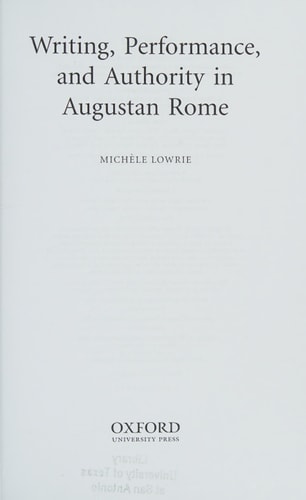
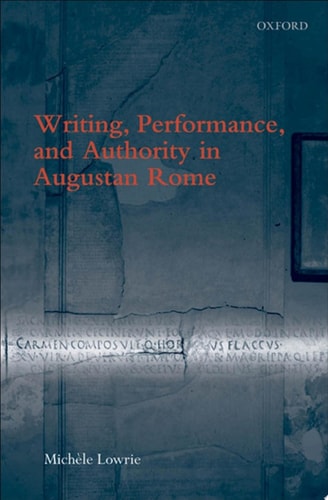
Writing, Performance, and Authority in Augustan Rome
0
0
As an Amazon Associate and affiliate partner, Menrva Books earns from qualifying purchases. Learn more
Author Description
In Writing, Performance, and Authority in Augustan Rome Michele Lowrie examines how the Romans conceived of their poetic media. Song has links to the divine through prophecy, while writing offers a more quotisian, but also more realistic way of presenting what a poet does. In a culture of highly polished book production where recitation was the fashion, to claim to sing or to write was one means of self-definition. Lowrie assesses the stakes of poetic claims to one medium or another. Generic definition is an important factor. Epic and lyric have traditional associations with song, while the literacy epistle is obviously written. But issuess of poetic interpretability and power matter even more. The choice of medium contributes to the debate about the relative potency of rival discourses, specifically poetry, politics, and the law. Writing could offer an escape from the social and political demands of the moment by shifting the focus toward the readership of posterity.
Menrva's Summary
THE THESIS
This book investigates how the choice between oral performance and written text served as a mechanism for Roman poets to negotiate authority, divine inspiration, and political influence during the Augustan era. Michele Lowrie, a scholar of Latin literature, analyzes the tension between the traditional associations of song with prophecy and the emerging reality of the book as a medium for intellectual permanence. By examining the interplay between poetic media and the broader cultural landscape of politics and law, the work argues that the act of writing provided a distinct strategy for poets to define their social standing and legacy.
THE SCOPE MAP
What You Will Find
- Analysis of the cultural shift from oral recitation to polished book production in Augustan Rome.
- Examination of generic conventions in epic and lyric poetry regarding their medium of delivery.
- Exploration of the relationship between poetic discourse and the competing powers of law and politics.
- Discussion of how the written word functioned as a tool for poets to address future readerships rather than immediate political demands.
THE AUTHORITY PERSPECTIVE
Scholars recognize this work as a significant contribution to the study of Roman literary culture and the sociology of authorship. Readers frequently note the academic density of the prose, which provides a rigorous framework for understanding the intersection of media and power in antiquity.
Page Count:
440
Publication Date:
2009-12-20
Publisher:
Oxford University Press
ISBN-10:
0199545677
ISBN-13:
9780199545674
Poetry
History
Latin poetry
Literary Criticism
Rome
Performance art
Ancient History
Community Tags
Other Editions(2)
Similar Books