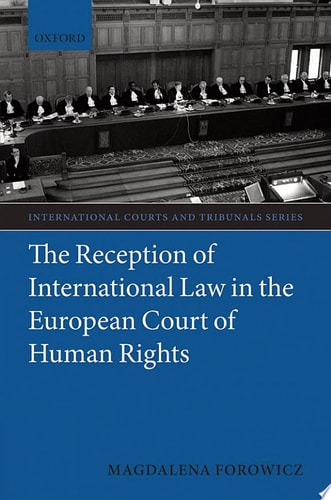
A Theory of Interpretation of the European Convention on Human Rights
0
0
As an Amazon Associate and affiliate partner, Menrva Books earns from qualifying purchases. Learn more
Author Description
Recent developments have raised important jurisprudential issues in relation to the interpretation of the European Convention on Human Rights which point to the relationship between the two foundational principles of a supranational human rights system: state sovereignty on one hand and the universality of human rights on the other. This book analyzes the idea that creative interpretation and choice in interpretation amounts, by default, to illegitimate discretion and is used to wave the flag of judicial self-restraint. It balances this against the inconsistency or lack of clarity in the methods used by the Court, most notably the margin of appreciation doctrine, and looks at the criticism often leveled at the Court that its use of the doctrine masks the real basis for its decisions. The cases that have been coming before the European Court of Human Rights in recent years pose serious interpretive challenges. Does the right to life under art. 2 ECHR include the right to terminate one's life? Does the right to private life under article 8 ECHR include the right to sleep at night free from airplane noise? Does the right to property under art. 1 Protocol 1 ECHR entitle the former King of Greece to claim compensation for the expropriation of royal property, following a referendum? Do homosexual couples have a right to adopt under art. 8 ECHR? This book argues that how law should be interpreted, and what legal rights individuals have, are important questions of political morality that are both capable, and in need of, principled justification.
Menrva's Summary
THE THESIS
This book investigates the core question of how the European Court of Human Rights should interpret the Convention to balance state sovereignty against the universal protection of human rights. George Letsas, a scholar in legal philosophy, utilizes a framework of political morality to argue that judicial interpretation is not merely a matter of discretion but requires principled justification. He examines the tension between the Court's reliance on the margin of appreciation doctrine and the need for consistent, transparent legal reasoning in the face of evolving societal challenges.
THE SCOPE MAP
What You Will Find
- Analysis of the margin of appreciation doctrine and its impact on judicial legitimacy.
- Examination of the conflict between national state sovereignty and supranational human rights standards.
- Case studies involving Article 2, Article 8, and Protocol 1 of the ECHR.
- A normative framework for interpreting legal rights as questions of political morality.
THE AUTHORITY PERSPECTIVE
Legal scholars and practitioners frequently cite this work as a rigorous contribution to the philosophy of international human rights law. Experts highlight the text's dense analytical approach, noting its utility for those seeking a deeper theoretical understanding of the European Court's interpretive methods.
Page Count:
300
Publication Date:
2009-05-03
Publisher:
Oxford University Press
ISBN-10:
0199563888
ISBN-13:
9780199563883
Human rights
Law
Jurisprudence
Political Philosophy
European Law
Community Tags
Similar Books