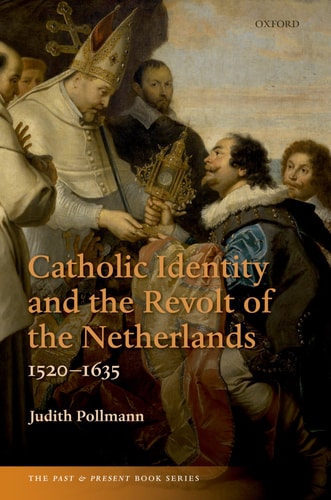
Catholic Identity and the Revolt of the Netherlands, 1520-1635
0
0
As an Amazon Associate and affiliate partner, Menrva Books earns from qualifying purchases. Learn more
Author Description
Mining the unusually rich range of diaries, memoirs, and poems written by Catholics in the sixteenth-century Low Countries, Judith Pollmann explores how Catholic believers experienced religious and political change in the generations between Erasmus and Rubens. The Revolt that ripped apart the sixteenth-century Netherlands came at the expense of a civil war, that eventually became a war of religion. Originally both Catholics and Protestants supported the rebellion, but it soon transpired that Catholics stood much to lose. Their churches were ravaged by iconoclasts, priests feared for their lives, and thousands of Catholics were forced to flee their hometowns; Calvinist city republics imposed radical religious changes, and in the rebel Dutch Republic Catholic worship was banned. Although the Habsburg Netherlands eventually witnessed the triumph of the militant Catholicism of the Baroque, Catholics throughout the Netherlands found that the Revolt had changed their lives forever.By listening to the voices of individual Catholics, lay and clerical, Professor Pollmann offers a new perspective both on the Revolt of the Netherlands, and on the experience of religious change in this period. She asks why Catholics responded so passively to Calvinist aggression in the early decades of the conflict, only to start offering very active support for a Catholic revival after 1585, when the Habsburg Netherlands once again became a Catholic bulwark. By exploring what it took to turn traditional Christians into the agents of their own Counterreformation, she highlights the changing dynamic between priests and laypeople as a catalyst for religious change in early modern Europe.
Menrva's Summary
THE THESIS
This book investigates how the lived experiences and shifting identities of Catholics in the Netherlands shaped the religious and political outcomes of the Dutch Revolt between 1520 and 1635. Judith Pollmann, a professor of early modern history, utilizes a diverse array of primary sources—including personal diaries, memoirs, and contemporary poetry—to reconstruct the internal perspective of Catholic communities during a period of intense sectarian conflict. By analyzing the transition from passive endurance to active participation in the Counterreformation, Pollmann argues that the changing relationship between the clergy and the laity served as a primary driver for religious transformation in early modern Europe.
THE SCOPE MAP
What You Will Find
- Analysis of primary source materials including personal diaries, memoirs, and poetry from the sixteenth-century Low Countries.
- Examination of the socio-political impact of the Dutch Revolt on Catholic populations and their religious practices.
- Investigation into the shift from early passive responses to Calvinist aggression toward the later militant Catholic revival.
- Exploration of the evolving dynamic between laypeople and the priesthood during the Counterreformation.
THE AUTHORITY PERSPECTIVE
Historians and scholars of the Reformation frequently cite this work for its innovative use of ego-documents to provide a bottom-up view of religious change. The text is recognized as a significant contribution to the study of early modern identity, offering a nuanced understanding of how political upheaval influences personal faith and community cohesion.
Page Count:
272
Publication Date:
2011-11-07
Publisher:
Oxford University Press
ISBN-10:
0199609918
ISBN-13:
9780199609918
History
Netherlands
Reformation
Netherlands history
European History
Religious History
Catholics
Community Tags
Similar Books