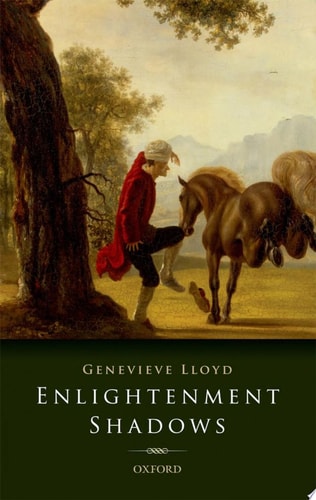
Enlightenment Shadows
0
0
As an Amazon Associate and affiliate partner, Menrva Books earns from qualifying purchases. Learn more
Author Description
The idea of the Enlightenment has become a touchstone for emotive and often contradictory articulations of contemporary western values. Enlightenment Shadows is a study of the place of Enlightenment thought in intellectual history and of its continued relevance. Genevieve Lloyd focuses especially on what is distinctive in ideas of intellectual character offered by key Enlightenment thinkers--on their attitudes to belief and scepticism; on their optimism about the future; and on the uncertainties and instabilities which nonetheless often lurk beneath their use of imagery of light. The book is organized around interconnected close readings of a range of texts: Montesquieu's Persian Letters; Voltaire's Philosophical Dictionary; Hume's essay The Sceptic; Adam Smith's treatment of sympathy and imagination in Theory of Moral Sentiments; d'Alembert's Preliminary Discourse to the Encyclopedia--together with Diderot's entry on Encyclopedia; Diderot's Rameau's Nephew; and Kant's essay Perpetual Peace. Throughout, the readings highlight ways in which Enlightenment thinkers enacted in their writing--and reflected on--the interplay of intellect, imagination, and emotion. Recurring themes include: the nature of judgement--its relations with imagination and with ideals of objectivity; issues of truth and relativism; the ethical significance of imagining one's self into the situations of others; cosmopolitanism; tolerance; and the idea of the secular.
Menrva's Summary
THE THESIS
This book investigates the inherent contradictions and intellectual complexities within Enlightenment thought, challenging the perception of the era as a monolithic beacon of reason. Genevieve Lloyd, a philosopher and scholar of intellectual history, utilizes a rigorous analytical framework to examine how key thinkers of the period navigated the tensions between optimism and skepticism. By focusing on the interplay of intellect, imagination, and emotion, the author argues that the Enlightenment was characterized by internal instabilities that remain relevant to contemporary debates about Western values.
THE SCOPE MAP
What You Will Find
- Close textual analysis of seminal works by Montesquieu, Voltaire, Hume, Adam Smith, d'Alembert, Diderot, and Kant.
- An examination of the role of imagination and empathy in the construction of moral and objective judgment.
- A thematic exploration of cosmopolitanism, secularism, and the limits of tolerance in 18th-century discourse.
- A critical methodology that connects historical philosophical texts to modern questions regarding intellectual character and belief.
THE AUTHORITY PERSPECTIVE
Scholars and students of philosophy frequently cite this work as a nuanced contribution to the study of Enlightenment intellectual history. The text is noted for its accessible yet rigorous approach to complex primary sources, making it a valuable resource for those interested in the intersection of ethics, imagination, and historical thought.
Page Count:
188
Publication Date:
2013-09-15
Publisher:
Oxford University Press
ISBN-10:
0199669562
ISBN-13:
9780199669561
Philosophy
Non-Fiction
Intellectual History
Enlightenment
Community Tags
Other Editions(4)

Similar Books



Reader Comments
Share Your Thoughts
No comments yet. Be the first to share your thoughts!