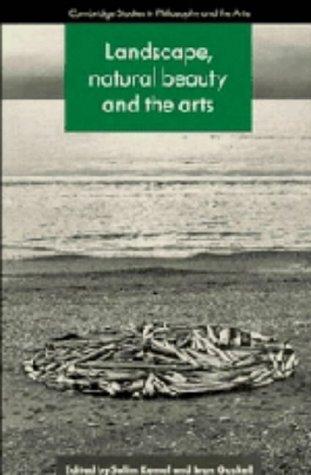
Landscape, Natural Beauty, and the Arts
0
0
As an Amazon Associate and affiliate partner, Menrva Books earns from qualifying purchases. Learn more
Author Description
Landscape, natural beauty and the arts offers probing studies of the complex structure of aesthetic responses to nature. Each chapter refines and expands the terms of discussion, and together they enrich the debate with insights from art history, literary criticism, geography and philosophy. To establish a framework, T. J. Diffey explores a conception of natural beauty free from metaphysical commitments, while R. W. Hepburn considers what constitutes seriousness and triviality in the appreciation of nature. Both explain their claims by reference to art. The next papers investigate the determination of natural beauty by the arts. John Barrell analyzes the social construction of nature and the viewing subject in eighteenth-century paintings, and P. Adams Sitney clarifies how another medium - film - construes nature and determines our appreciation. Turning from the representation to the represented, Don Gifford considers the influence of the American wilderness on conceptions of natural beauty. Next Yi-Fu Tuan looks to the relation of human beings to icescapes and deserts, suggesting that perceptions of natural beauty too often depend on experiences of temperate climates. Perhaps the strongest contrast to the otherness of nature lies in its circumscription in gardening. Stephanie Ross shows how this structures contemporary environmental art. Developing the themes of the duality of gardens - their close reference to nature, and their construction out of nature under the aegis of high art - Donald Crawford defends the viability of comparisons between art and nature generally; Allen Carlson contends that the scientific understanding of nature provides a vocabulary that is inescapable even in aesthetic appreciation; and Arnold Berleant considers whether aesthetics harbors distinctive experiences, of art and nature, as part of the larger question: is appreciation engagement or contemplation? Finally, Noel Carroll explores the room for an emotional response to natural beau
Menrva's Summary
THE THESIS
This book probes the complex structure of aesthetic responses to nature, drawing insights from diverse academic fields. The collection features studies that refine and expand the discussion of natural beauty, incorporating perspectives from art history, literary criticism, geography, and philosophy. Contributors explore concepts such as natural beauty free from metaphysical commitments, the determination of natural beauty by the arts, and the influence of specific environments like the American wilderness and extreme climates on aesthetic perceptions. It also examines the role of gardening and contemporary environmental art, and questions whether aesthetic appreciation of nature is engagement or contemplation.
THE SCOPE MAP
- Exploration of natural beauty independent of metaphysical commitments (T. J. Diffey).
- Analysis of seriousness and triviality in nature appreciation, with reference to art (R. W. Hepburn).
- Examination of how eighteenth-century paintings construct nature and the viewing subject (John Barrell).
- Clarification of how film construes nature and shapes appreciation (P. Adams Sitney).
- Influence of the American wilderness on conceptions of natural beauty (Don Gifford).
- Perceptions of natural beauty in icescapes and deserts versus temperate climates (Yi-Fu Tuan).
- Structuring of contemporary environmental art through gardening (Stephanie Ross).
- Defense of comparisons between art and nature, and the role of scientific understanding in aesthetic appreciation (Donald Crawford, Allen Carlson).
THE AUTHORITY PERSPECTIVE
The collection is regarded as a significant contribution to the philosophical and aesthetic study of nature. Its interdisciplinary approach, weaving together insights from art history, literary criticism, geography, and philosophy, is noted for enriching the ongoing debate. The individual essays are appreciated for their focused analysis of specific aspects of our aesthetic engagement with the natural world, from the appreciation of beauty to the influence of art and environment on perception. The book is seen as a valuable resource for scholars and students interested in the complex relationship between humanity, nature, and art.
Page Count:
278
Publication Date:
1993-01-01
ISBN-10:
0521432790
ISBN-13:
9780521432795
Nature
Non-Fiction
Philosophy
Art History
Literary Criticism
Aesthetics
Community Tags
Similar Books