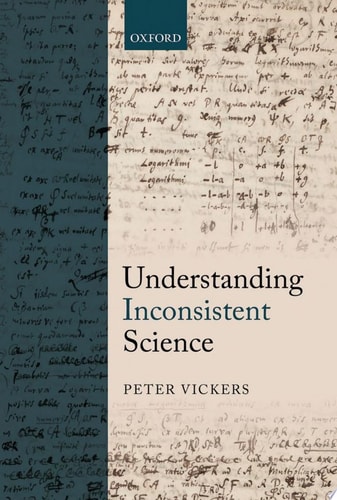
Understanding Inconsistent Science
0
0
As an Amazon Associate and affiliate partner, Menrva Books earns from qualifying purchases. Learn more
Author Description
In recent years philosophers of science have urged that many scientific theories are extremely useful and successful despite being internally inconsistent. Via an investigation of eight alleged "inconsistent theories" in the history of science, Peter Vickers urges that this view is at best overly simplistic. Most of these cases can only be described as examples of "inconsistent science" if we employ reconstructions of science which depart from the real (history of) science to an unacceptable degree. And where we do find genuine inconsistency he argues that the nature of--and correct response to--the inconsistency differs dramatically depending on the details of the science in question. Thus we are warned against making overly general claims about 'science': what are all called "theories" in the history of science are actually significantly different entities, which work in different ways and react to inconsistency in different ways. Vickers argues that the traditional goal of philosophy to make substantial, fully general claims about "how science works" is misguided, and can be significantly circumvented if we re-frame our debates such that reference to "theories" is eliminated. In this way one is not tempted to think of the history of science as a history of instances of the same kind--theory--about which one could hope to say something substantial and general. And in addition eliminating theory means that we avoid fruitless debates about the 'real' nature and content of "theories." Vickers' account leads to a particularist philosophy of science, where the reader is urged to appreciate the often dramatic differences between the different "inconsistencies in science" which have been identified.
Menrva's Summary
THE THESIS
This book investigates whether scientific theories can be both internally inconsistent and successful, ultimately challenging the validity of such claims. Peter Vickers, a philosopher of science, examines eight historical case studies to demonstrate that the notion of 'inconsistent science' often relies on inaccurate historical reconstructions. He argues that the traditional philosophical goal of creating universal, general claims about how science functions is misguided and proposes a shift toward a particularist approach that avoids the problematic concept of 'theories' altogether.
THE SCOPE MAP
What You Will Find
- Detailed analysis of eight specific historical cases of alleged scientific inconsistency.
- A critique of the standard philosophical reliance on the term 'theory' as a monolithic entity.
- A methodological framework for a particularist philosophy of science that prioritizes historical accuracy.
- Arguments for why the response to inconsistency varies significantly depending on the specific scientific context.
THE AUTHORITY PERSPECTIVE
Experts in the philosophy of science recognize this work as a significant challenge to traditional structuralist views on scientific theory. Readers frequently note the academic density of the prose, which requires a strong background in the history and philosophy of science to fully appreciate the author's nuanced arguments.
Page Count:
288
Publication Date:
2013-11-15
Publisher:
Oxford University Press
ISBN-10:
0199692025
ISBN-13:
9780199692026
Science
Philosophy
Science
Epistemology
Community Tags
Other Editions(3)

Similar Books











Reader Comments
Share Your Thoughts
No comments yet. Be the first to share your thoughts!