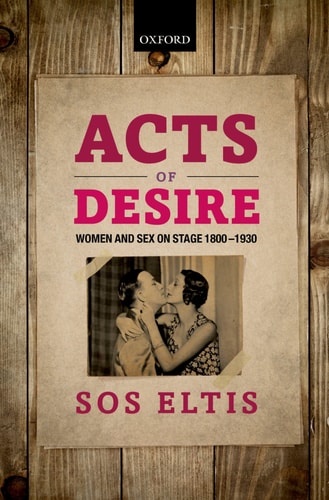
Acts of Desire: Women and Sex on Stage 1800-1930
0
0
As an Amazon Associate and affiliate partner, Menrva Books earns from qualifying purchases. Learn more
Author Description
From seduced maidens to adulterous wives, bigamists, courtesans, kept women and streetwalkers, the so-called 'fallen woman' was a ubiquitous and enduring figure on the Victorian and Edwardian stage. Acts of Desire traces the theatrical representation of illicit female sexuality from early nineteenth-century melodramas, through sensation dramas, Ibsenite sex-problem plays and suffrage dramas, to early social realism and the well-made plays of Pinero, Jones, Maugham, and Coward. This study reveals and analyses enduring plot lines and tropes that continue to influence contemporary theatre and film. Women's illicit desires became a theatrical focus for anxieties and debates surrounding gender roles, women's rights, sexual morality, class conflict, economics, eugenics, and female employment. The theatre played a central role in both establishing and challenging sexual norms, and many playwrights exploited the ambiguities and implications of performance to stage disruptive spectacles of female desire, agency, energy, and resourcefulness, using ingenuity and skill to evade the control of that ever watchful state censor, the Lord Chamberlain.Covering an astonishing range of theatrical, social, literary, and political texts, this study challenges the currency and validity of the long-established critical term 'the fallen woman', and establishes the centrality of the theatre to cultural and sexual debates throughout the period. Acts of Desire encompasses published and unpublished plays, archival material, censorship records, and contemporary reviews to reveal the surprising continuities, complex debates, covert meanings, and exuberant spectacles which marked the history of theatrical representations of female sexuality. Engaging with popular and 'high art' performances, this study also reveals the vital connections between theatre and its sister arts, tracing the exchange of influences between Victorian drama, narrative painting and the novel, and showing theatre to be a cruc
Menrva's Summary
THE THESIS
This study investigates how the theatrical representation of illicit female sexuality between 1800 and 1930 functioned as a primary site for debating gender roles, morality, and social anxieties. Sos Eltis, a scholar of Victorian and Edwardian drama, utilizes a vast array of archival materials, censorship records, and play texts to argue that the figure of the 'fallen woman' was a complex, evolving construct rather than a static trope. By examining the interplay between playwrights, the state censor, and the audience, Eltis demonstrates how the stage served as a critical arena for challenging and reinforcing sexual norms during a period of rapid social change.
THE SCOPE MAP
What You Will Find
- Analysis of theatrical genres including melodrama, sensation drama, Ibsenite sex-problem plays, and social realism.
- Examination of the influence of the Lord Chamberlain's censorship office on the staging of female desire.
- Integration of archival evidence, including unpublished plays, contemporary reviews, and records of state censorship.
- Exploration of the intersection between theatre and sister arts like narrative painting and the novel.
THE AUTHORITY PERSPECTIVE
Scholars and critics recognize this work as a rigorous re-evaluation of the 'fallen woman' trope in nineteenth and early twentieth-century drama. Readers frequently note the depth of the archival research and the clarity with which Eltis connects theatrical performance to broader cultural and political shifts.
Page Count:
288
Publication Date:
2013-06-10
Publisher:
Oxford University Press
ISBN-10:
0199691355
ISBN-13:
9780199691357
History
Theatre
Gender Studies
English drama
Literary Criticism
In literature
Community Tags
Similar Books