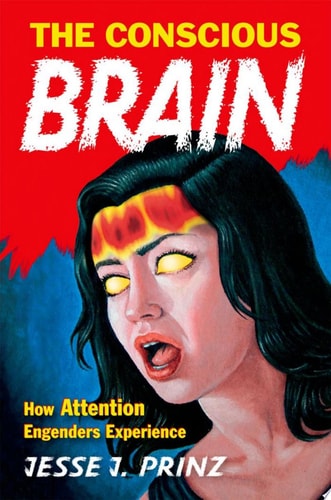
The Conscious Brain
0
0
As an Amazon Associate and affiliate partner, Menrva Books earns from qualifying purchases. Learn more
Author Description
The Problem Of Consciousness Continues To Be A Subject Of Great Debate In Cognitive Science. Synthesizing Decades Of Research, The Conscious Brain Advances A New Theory Of The Psychological And Neurophysiological Correlates Of Conscious Experience. Prinz's Account Of Consciousness Makes Two Main Claims: First Consciousness Always Arises At A Particular Stage Of Perceptual Processing, The Intermediate Level, And, Second, Consciousness Depends On Attention. Attention Changes The Flow Of Information Allowing Perceptual Information To Access Memory Systems. Neurobiologically, This Change In Flow Depends On Synchronized Neural Firing. Neural Synchrony Is Also Implicated In The Unity Of Consciousness And In The Temporal Duration Of Experience. Prinz Also Explores The Limits Of Consciousness. We Have No Direct Experience Of Our Thoughts, No Experience Of Motor Commands, And No Experience Of A Conscious Self. All Consciousness Is Perceptual, And It Functions To Make Perceptual Information Available To Systems That Allows For Flexible Behavior. Prinz Concludes By Discussing Prevailing Philosophical Puzzles. He Provides A Neuroscientifically Grounded Response To The Leading Argument For Dualism, And Argues That Materialists Need Not Choose Between Functional And Neurobiological Approaches, But Can Instead Combine These Into Neurofunctional Response To The Mind-body Problem. The Conscious Brain Brings Neuroscientific Evidence To Bear On Enduring Philosophical Questions, While Also Surveying, Challenging, And Extending Philosophical And Scientific Theories Of Consciousness. All Readers Interested In The Nature Of Consciousness Will Find Prinz's Work Of Great Interest.
Menrva's Summary
THE THESIS
How does the human brain generate conscious experience through the intersection of perception, attention, and neural activity? Jesse J. Prinz, a philosopher and cognitive scientist, synthesizes decades of empirical research to propose a neurofunctional theory of consciousness. He argues that conscious experience is fundamentally perceptual, emerging at an intermediate stage of processing that requires attention to bridge the gap between sensory input and memory systems.
THE SCOPE MAP
What You Will Find
- A detailed model of consciousness as an intermediate stage of perceptual processing.
- An analysis of the role of attention and synchronized neural firing in information flow.
- A critical examination of the limits of consciousness, including the absence of direct experience regarding motor commands or the self.
- A neurofunctional framework designed to resolve the mind-body problem and address dualist arguments.
THE AUTHORITY PERSPECTIVE
Experts and scholars in the field of cognitive science recognize this work as a significant contribution to the ongoing debate regarding the neural correlates of consciousness. Readers frequently note the academic density of the prose, which effectively bridges the gap between complex philosophical inquiry and current neuroscientific data.
Page Count:
416
Publication Date:
2012-01-01
Publisher:
Oxford University Press
ISBN-10:
019971813X
ISBN-13:
9780199718139
Non-Fiction
Psychology
Philosophy
Neuroscience
Community Tags
Similar Books