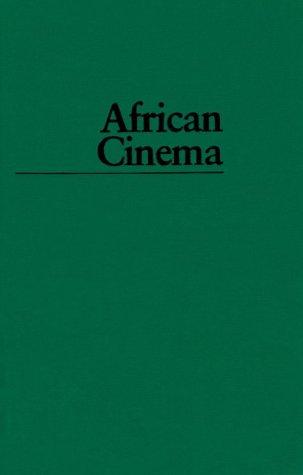
African Cinema: Politics and Culture
0
0
As an Amazon Associate and affiliate partner, Menrva Books earns from qualifying purchases. Learn more
Author Description
Manthia Diawara provides an insider's account of the history and current status of African cinema. African Cinema: Politics and Culture is the first extended study in English of Sub-Saharan cinema. Employing an interdisciplinary approach which draws on history, political science, economics, and cultural studies, Diawara discusses such issues as film production and distribution, and film aesthetics from the colonial period to the present. The book traces the growth of African cinema through the efforts of pioneer filmmakers such as Paulin Soumanou Vieyra, Oumarou Ganda, Jean-René Débrix, Jean Rouch, and Ousmane Sembène, the Pan-African Filmmakers' Organization (FEPACI), and the Ougadougou Pan-African Film Festival (FESPACO). Diwara focuses on the production and distribution histories of key films such as Ousmane Sembène's Black Girl and Mandabi (1968) and Souleymane Cissé's Fine (1982). He also examines the role of missionary films in Africa, Débrix's ideas concerning 'magic, ' the links between Yoruba theater and Nigerian cinema, and the parallels between Hindu mythologicals in India and the Yoruba-theater - inflected films in Nigeria. Diawara also looks at film and nationalism, film and popular culture, and the importance of FESPACO. African Cinema: Politics and Culture makes a major contribution to the expanding discussion of Eurocentrism, the canon, and multi-culturalism.
Menrva's Summary
THE THESIS
This book investigates the historical development and contemporary landscape of cinema across Sub-Saharan Africa. The author, Manthia Diawara, draws on his insider perspective and an interdisciplinary approach, integrating history, political science, economics, and cultural studies to analyze film production, distribution, and aesthetics from the colonial era to the present. The study highlights the contributions of pioneering filmmakers, the significance of organizations like FEPACI, and the impact of festivals such as FESPACO, while also examining the role of missionary films and the connections between theater and cinema in various regions. It ultimately positions African cinema within broader discussions of Eurocentrism, canon formation, and multiculturalism.
THE SCOPE MAP
- A comprehensive history of Sub-Saharan African cinema from the colonial period to the present.
- Analysis of film production, distribution, and aesthetic trends.
- Profiles of key pioneer filmmakers including Paulin Soumanou Vieyra, Oumarou Ganda, Jean-René Débrix, Jean Rouch, and Ousmane Sembène.
- Discussion of the Pan-African Filmmakers' Organization (FEPACI) and the Ougadougou Pan-African Film Festival (FESPACO).
- Case studies of significant films such as Ousmane Sembène's 'Black Girl' and 'Mandabi' (1968), and Souleymane Cissé's 'Fine' (1982).
- Examination of missionary films, the concept of 'magic' in film, and the relationship between Yoruba theater and Nigerian cinema.
- Exploration of film's role in nationalism and popular culture.
THE AUTHORITY PERSPECTIVE
This book is regarded as a foundational text in the study of African cinema, offering a comprehensive and interdisciplinary analysis. Scholars have noted its detailed examination of production and distribution challenges, as well as its insightful exploration of aesthetic developments and cultural contexts. The work is frequently cited for its contribution to understanding the political and cultural dimensions of filmmaking in Sub-Saharan Africa and its engagement with post-colonial discourse.
Page Count:
192
Publication Date:
1992-01-01
ISBN-10:
0253317045
ISBN-13:
9780253317049
History
Non-Fiction
Art
Film Studies
Community Tags
Similar Books