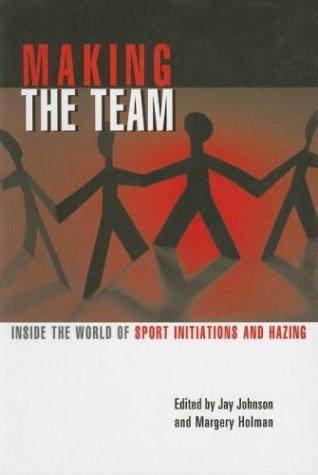
Making the Team
0
0
As an Amazon Associate and affiliate partner, Menrva Books earns from qualifying purchases. Learn more
Author Description
This book provides a theoretical analysis of hazing from a sociological perspective, both in the United States and in Canada. It is designed to provide an understanding of hazing for use in sociology and sport management classes, and is also highly suitable for courses that examine gender roles and socialization. The collection chronicles the hazing practices that exist in sport, and offers an historical overview of hazing and its emergence in today's sport culture. It also provides a theoretical and legal guide for understanding and managing hazing in sport. The discussion focuses on the role of tradition, power, and violence in hazing, and on how the rituals serve as a confirmation of masculinity and dominance. These issues engage the reader in critical thought about a contentious aspect of sport that has until recently remained unchallenged.--BOOK JACKET.
Menrva's Summary
THE THESIS
This book offers a sociological analysis of hazing practices within sports, examining their historical context and theoretical underpinnings. The author, Jay Johnson, provides a comprehensive overview of hazing in both the United States and Canada, drawing on sociological theories to explain its prevalence and function. The work is structured to serve as a resource for students and professionals in sociology and sport management, while also addressing themes of gender roles and socialization. It critically engages with the role of tradition, power, and violence in hazing rituals, particularly as they relate to the confirmation of masculinity and dominance.
THE SCOPE MAP
- Theoretical analysis of hazing from a sociological perspective.
- Examination of hazing practices in both the United States and Canada.
- Historical overview of hazing and its emergence in sport culture.
- Theoretical and legal guide for understanding and managing hazing in sport.
- Focus on the role of tradition, power, and violence in hazing rituals.
- Analysis of how hazing rituals serve as a confirmation of masculinity and dominance.
- Discussion of gender roles and socialization within sport contexts.
- Suitable for sociology and sport management courses.
THE AUTHORITY PERSPECTIVE
This book is designed as an academic resource, offering a theoretical and sociological examination of hazing in sports. Its focus on critical thought regarding tradition, power, and masculinity suggests it aims to provoke discussion on a contentious aspect of sport culture. The inclusion of both historical and legal perspectives indicates a comprehensive approach to the subject matter. The work is positioned for use in university-level courses, implying an expectation of scholarly engagement from its readers.
Page Count:
179
Publication Date:
2004-01-01
ISBN-10:
1551302470
ISBN-13:
9781551302478
Sports
History
Non-Fiction
Psychology
Gender Studies
Social Issues
Sociology
Community Tags
Similar Books