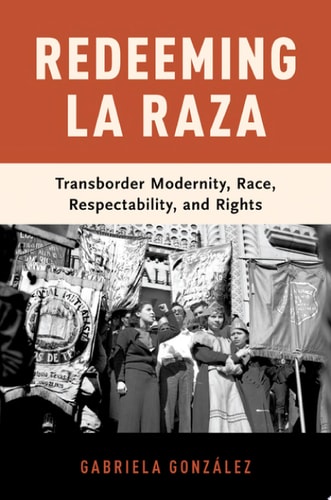
Redeeming La Raza
Author Description
The Transborder Modernization Of Mexico And The American Southwest During The Late Nineteenth And Early Twentieth Centuries Transformed The Lives Of Ethnic Mexicans Across The Political Divide. While Industrialization, Urbanization, Technology, Privatization, And Wealth Concentration Benefitted Some, Many More Experienced Dislocation, Exploitative Work Relations, And Discrimination Based On Race, Gender, And Class. The Mexican Revolution Brought These Issues To The Fore Within Mexican Society, Igniting A Diaspora To El Norte. Within The United States, Similar Economic And Social Power Dynamics Plagued Tejanos And Awaited The War Refugees. Political Activism Spearheaded By Individuals And Organizations Such As The Idars, Leonor Villegas' De Magnón's White Cross, The Magonista Movement, The Munguias, Emma Tenayuca, And Lulac Emerged In The Borderlands To Address The Needs Of Ethnic Mexicans Whose Lives Were Shaped By Racism, Patriarchy, And Poverty. As Gabriela Gonzalez Shows In This Book, Economic Modernization Relied On Social Hierarchies That Were Used To Justify Economic Inequities. Redeeming La Raza Was About Saving Ethnic Mexicans In Texas From A Social Hierarchy Premised On False Notions Of White Supremacy And Mexican Inferiority. Activists Used Privileges Of Class, Education, Networks, And Organizational Skills To Confront The Many Injustices That Racism Bred, But They Used Different Strategies. Thus, The Anarcho-syndicalist Approach Of Magónistas Stands In Contrast To The Social And Cultural Redemption Politics Of The Idars Who Used The Press To Challenge A Jaime Crow World. Also, The Family Promoted The Intellectual, Material, And Cultural Uplift Of La Raza, Working To Combat Negative Stereotypes Of Ethnic Mexicans. Similar Contrasts Can Be Drawn Between The Labor Activism Of Emma Tenayuca And The Munguias, Whose Struggle For Rights Employed A Politics Of Respectability That Encouraged Ethnic Pride And Unity. Finally, Maternal Feminist Approaches And The Pol
Menrva's Summary
THE THESIS
This book investigates how ethnic Mexican activists in Texas challenged the social and economic hierarchies of the late nineteenth and early twentieth centuries that were built upon white supremacy and systemic inequality. Gabriela González, a historian specializing in the borderlands, utilizes primary source documents and organizational records to analyze the diverse strategies employed by activists to combat racism, patriarchy, and poverty. The work argues that while these figures shared the goal of uplifting the Mexican community, their methods ranged from anarcho-syndicalism to the politics of respectability.
THE SCOPE MAP
What You Will Find
- Analysis of the socio-economic impacts of industrialization and the Mexican Revolution on the borderlands.
- Comparative study of activist strategies, including the Idar family's press-based advocacy and Emma Tenayuca's labor organizing.
- Examination of the role of gender, class, and education in shaping political resistance.
- Historical documentation of organizations such as LULAC and the Magonista movement.
THE AUTHORITY PERSPECTIVE
Scholars recognize this work as a significant contribution to the history of the American Southwest and the intellectual traditions of Mexican American activism. Readers frequently note the depth of the archival research and the clarity with which the author distinguishes between the various ideological approaches within the movement.
Page Count:
336
Publication Date:
2018-01-01
Publisher:
Oxford University Press
ISBN-10:
019991415X
ISBN-13:
9780199914159
History
Gender Studies
Social Science
Labor history
Community Tags
Similar Books