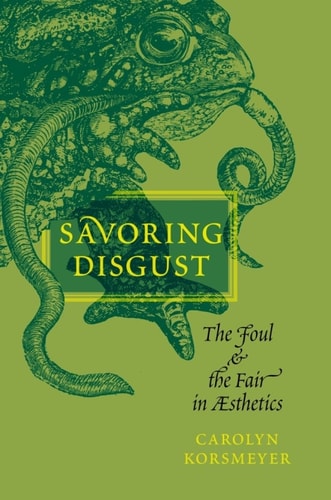
Savoring Disgust: The Foul and the Fair in Aesthetics
0
0
As an Amazon Associate and affiliate partner, Menrva Books earns from qualifying purchases. Learn more
Author Description
Disgust is among the strongest of aversions, characterized by involuntary physical recoil and even nausea. Yet paradoxically, disgusting objects can sometimes exert a grisly allure, and this emotion can constitute a positive, appreciative aesthetic response when exploited by works of art -- a phenomenon labelled here "aesthetic disgust." While the reactive, visceral quality of disgust contributes to its misleading reputation as a relatively "primitive" response mechanism, it is this feature that also gives it a particular aesthetic power when manifest in art. Most treatments of disgust mistakenly interpret it as only an extreme response, thereby neglecting the many subtle ways that it operates aesthetically. This study calls attention to the diversity and depth of its uses, analyzing the emotion in detail and considering the enormous variety of aesthetic forms it can assume in works of art and --unexpectedly-- even in foods. In the process of articulating a positive role for disgust, this book examines the nature of aesthetic apprehension and argues for the distinctive mode of cognition that disgust affords -- an intimate apprehension of physical mortality. Despite some commonalities attached to the meaning of disgust, this emotion assumes many aesthetic forms: it can be funny, profound, witty, ironic, unsettling, sorrowful, or gross. To demonstrate this diversity, several chapters review examples of disgust as it is aroused by art. The book ends by investigating to what extent disgust can be discovered in art that is also considered beautiful.
Menrva's Summary
THE THESIS
This book investigates the paradoxical role of disgust as a legitimate and complex aesthetic response rather than a purely primitive aversion. Carolyn Korsmeyer, a professor of philosophy, utilizes a framework of aesthetic theory and cognitive psychology to argue that disgust provides a unique mode of apprehension regarding physical mortality. By analyzing how art and food evoke visceral reactions, the author demonstrates that disgust functions as a sophisticated tool for intellectual and emotional engagement.
THE SCOPE MAP
What You Will Find
- Philosophical analysis of aesthetic disgust and its cognitive functions
- Examination of disgust in diverse artistic mediums and culinary experiences
- Exploration of the intersection between the repulsive and the beautiful
Scope Limits
- Does not provide a comprehensive history of disgust in all cultural contexts
- Does not focus on the clinical or psychological treatment of phobias related to disgust
THE AUTHORITY PERSPECTIVE
Scholars and critics recognize this work as a significant contribution to the philosophy of art, particularly for its nuanced treatment of negative emotions. Readers frequently note the academic density of the prose, which makes it a foundational text for those studying the intersection of aesthetics and human psychology.
Page Count:
210
Publication Date:
2011-01-01
Publisher:
Oxford University Press
ISBN-10:
0190207841
ISBN-13:
9780190207847
Psychology
Philosophy
Aesthetics
Art Theory
Community Tags
Similar Books