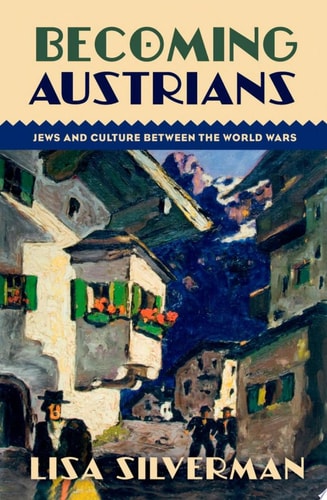
Becoming Austrians: Jews and Culture between the World Wars
0
0
As an Amazon Associate and affiliate partner, Menrva Books earns from qualifying purchases. Learn more
Author Description
The collapse of Austria-Hungary in 1918 left all Austrians in a state of political, social, and economic turmoil, but Jews in particular found their lives shaken to the core. Although Jews' former comfort zone suddenly disappeared, the dissolution of the Dual Monarchy also created plenty of room for innovation and change in the realm of culture. Jews eagerly took up the challenge to fill this void, and they became heavily invested in culture as a way to shape their new, but also vexed, self-understandings. By isolating the years between the World Wars and examining formative events in both Vienna and the provinces, Becoming Austrians: Jews and Culture between the World Wars demonstrates that an intensified marking of people, places, and events as "Jewish" accompanied the crises occurring in the wake of Austria-Hungary's collapse, with profound effects on Austria's cultural legacy. In some cases, the consequences of this marking resulted in grave injustices. Philipp Halsmann, for example, was wrongfully imprisoned for the murder of his father years before he became a world-famous photographer. And the men who shot and killed writer Hugo Bettauer and philosopher Moritz Schlick received inadequate punishment for their murderous deeds. But engagements with the terms of Jewish difference also characterized the creation of culture, as shown in Hugo Bettauer's satirical novel The City without Jews and its film adaptation, other texts by Veza Canetti, David Vogel, A.M. Fuchs, Vicki Baum, and Mela Hartwig, and performances at the Salzburg Festival and the Yiddish theater in Vienna. By examining the lives, works, and deeds of a broad range of Austrians, Lisa Silverman reveals how the social codings of politics, gender, and nation received a powerful boost when articulated along the lines of Jewish difference.
Menrva's Summary
THE THESIS
This work investigates how the collapse of the Austro-Hungarian Empire and the subsequent interwar period forced Austrian Jews to redefine their national and cultural identities amidst rising social volatility. Lisa Silverman, a historian specializing in modern European history, utilizes a diverse array of archival materials, literary texts, and legal records to argue that the marking of Jewish identity became a central mechanism for navigating the political and social crises of the era. By analyzing both urban centers like Vienna and provincial regions, the author demonstrates how the articulation of Jewish difference influenced the broader construction of Austrian national identity and cultural production.
THE SCOPE MAP
What You Will Find
- Analysis of the interwar period in Austria from 1918 to the onset of World War II.
- Examination of cultural artifacts including literature by Hugo Bettauer, Veza Canetti, and Vicki Baum.
- Case studies of legal and social injustices, such as the trial of Philipp Halsmann and the murders of Hugo Bettauer and Moritz Schlick.
- Exploration of how gender, politics, and nationalism were redefined through the lens of Jewish identity.
THE AUTHORITY PERSPECTIVE
Scholars and historians frequently cite this text for its nuanced approach to the intersection of cultural production and identity politics in interwar Europe. Readers often note the academic density of the prose, which provides a rigorous examination of how social codings shaped the Austrian cultural legacy.
Page Count:
354
Publication Date:
2012-01-01
Publisher:
Oxford University Press
ISBN-10:
0199942722
ISBN-13:
9780199942725
History
Jewish History
Jews austria
European History
Jewish Studies
Jews
Social History
Antisemitism
Cultural History
Austria
Modern History
Community Tags
Other Editions(2)

Similar Books


Reader Comments
Share Your Thoughts
No comments yet. Be the first to share your thoughts!