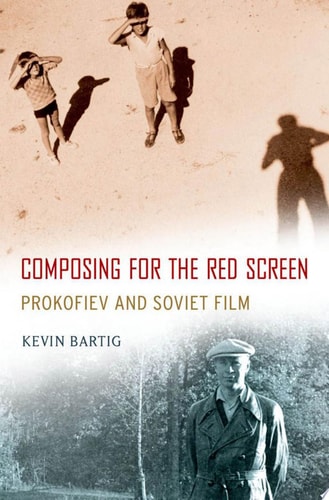
Composing for the Red Screen: Prokofiev and Soviet Film
0
0
As an Amazon Associate and affiliate partner, Menrva Books earns from qualifying purchases. Learn more
Author Description
Sound film captivated Sergey Prokofiev during the final two decades of his life: he considered composing for nearly two dozen pictures, eventually undertaking eight of them, all Soviet productions. Hollywood luminaries such as Gloria Swanson tempted him with commissions, and arguably more people heard his film music than his efforts in all other genres combined. Films for which Prokofiev composed, in particular those of Sergey Eisenstein, are now classics of world cinema. Drawing on newly available sources, Composing for the Red Screen examines - for the first time - the full extent of this prodigious cinematic career. Author Kevin Bartig examines how Prokofiev's film music derived from a self-imposed challenge: to compose "serious" music for a broad audience. The picture that emerges is of a composer seeking an individual film-music voice, shunning Hollywood models and objecting to his Soviet colleagues' ideologically expedient film songs. Looking at Prokofiev's film music as a whole - with well-known blockbusters like Alexander Nevsky considered alongside more obscure or aborted projects - reveals that there were multiple solutions to the challenge, each with varying degrees of success. Prokofiev carefully balanced his own populist agenda, the perceived aesthetic demands of the films themselves, and, later on, Soviet bureaucratic demands for accessibility.
Menrva's Summary
THE THESIS
How did Sergey Prokofiev navigate the aesthetic and ideological pressures of the Soviet film industry while attempting to maintain his artistic integrity as a composer? Kevin Bartig, a scholar of music and media, utilizes newly accessible archival sources to analyze Prokofiev's transition into cinematic composition during his final two decades. The book argues that Prokofiev viewed film as a vehicle for his populist ambitions, specifically aiming to create serious music that remained accessible to a broad audience. Bartig demonstrates how the composer resisted both Western Hollywood conventions and the rigid ideological expectations of his Soviet peers to develop a distinct musical voice.
THE SCOPE MAP
What You Will Find
- Detailed analysis of Prokofiev's eight completed Soviet film scores.
- Examination of aborted projects and unrealized commissions from Hollywood figures.
- Comparative study of Prokofiev's work alongside the films of Sergey Eisenstein.
- Discussion of the tension between artistic autonomy and Soviet bureaucratic mandates for accessibility.
THE AUTHORITY PERSPECTIVE
Experts recognize this work as a significant contribution to the study of twentieth-century film music and Soviet cultural history. Readers frequently note the academic rigor and the depth of archival research presented in Bartig's analysis of Prokofiev's cinematic output.
Page Count:
254
Publication Date:
2013-01-01
Publisher:
Oxford University Press
ISBN-10:
0199968063
ISBN-13:
9780199968060
Biography
History
Music
Criticism history
Soviet Union
Humanities
Music Russian
European History
Film
Music History
Community Tags
Similar Books