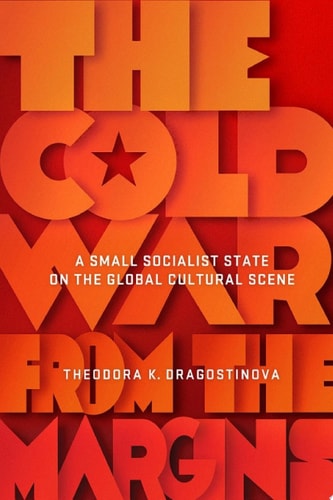
The Cold War from the Margins A Small Socialist State on the Global Cultural Scene
0
0
As an Amazon Associate and affiliate partner, Menrva Books earns from qualifying purchases. Learn more
Author Description
In The Cold War from the Margins, Theodora K. Dragostinova reappraises the global 1970s from the perspective of a small socialist state—Bulgaria—and its cultural engagements with the Balkans, the West, and the Third World. During this anxious decade, Bulgaria's communist leadership invested heavily in cultural diplomacy to bolster its legitimacy at home and promote its agendas abroad. Bulgarians traveled the world to open museum exhibitions, show films, perform music, and showcase the cultural heritage and future aspirations of their "ancient yet modern" country. As Dragostinova shows, these encounters transcended the Cold War's bloc mentality: Bulgaria's relations with Greece and Austria warmed, émigrés once considered enemies were embraced, and new cultural ties were forged with India, Mexico, and Nigeria. Pursuing contact with the West and solidarity with the Global South boosted Bulgaria's authoritarian regime by securing new allies and unifying its population. Complicating familiar narratives of both the 1970s and late socialism, The Cold War from the Margins places the history of socialism in an international context and recovers alternative models of global interconnectivity along East-South lines. Thanks to generous funding from The Ohio State University Libraries and its participation in TOME (Toward an Open Monograph Ecosystem), the ebook editions of this book are available as Open Access volumes from Cornell Open (cornellpress.cornell.edu/cornell-open) and other repositories.
Menrva's Summary
THE THESIS
This book investigates how Bulgaria, a small socialist state, navigated the global cultural landscape during the anxious decade of the 1970s. Theodora K. Dragostinova examines Bulgaria's cultural diplomacy, which was heavily utilized by its communist leadership to enhance domestic legitimacy and advance foreign policy objectives. Through international museum exhibitions, film screenings, and musical performances, Bulgarians presented their nation as both ancient and modern, seeking to forge connections beyond the rigidities of the Cold War's bloc mentality. These cultural exchanges fostered warmer relations with countries like Greece and Austria, reintegrated previously estranged émigrés, and established new cultural ties with nations in the Third World such as India, Mexico, and Nigeria, thereby bolstering the authoritarian regime and unifying its population.
THE SCOPE MAP
- Analysis of Bulgaria's cultural diplomacy during the 1970s.
- Examination of Bulgaria's cultural engagements with the Balkans, the West, and the Third World.
- Case studies of Bulgarian cultural exhibitions, films, music, and heritage showcases abroad.
- Exploration of how these cultural encounters transcended Cold War divisions.
- Discussion of Bulgaria's relationships with Greece, Austria, India, Mexico, and Nigeria.
- An argument for alternative models of global interconnectivity along East-South lines.
THE AUTHORITY PERSPECTIVE
The book is presented as a significant reappraisal of the global 1970s, specifically from the perspective of a smaller socialist nation. It highlights how cultural diplomacy was a key tool for Bulgaria to assert its presence and influence on the international stage. The work is noted for complicating familiar narratives of both the 1970s and the history of late socialism by placing it within a broader international context. The availability of ebook editions as Open Access volumes indicates a commitment to broad dissemination and scholarly accessibility.
Page Count:
324
Publication Date:
2021-05-15
Publisher:
Cornell University Press
ISBN-10:
1501755560
ISBN-13:
9781501755569
Non-Fiction
History
Bulgaria
Socialism
International relations
Cold War
Global South
Community Tags
Similar Books