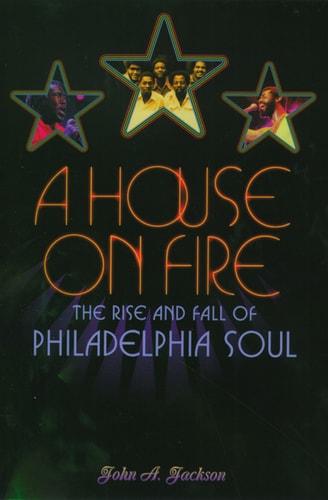
A House on Fire: The Rise and Fall of Philadelphia Soul
0
0
As an Amazon Associate and affiliate partner, Menrva Books earns from qualifying purchases. Learn more
Author Description
"If You Don't Know Me By Now," "The Love I Lost," "The Soul Train Theme," "Then Came You," "Ain't No Stoppin' Us Now"--the distinctive music that became known as Philly Soul dominated the pop music charts in the 1970s. In A House on Fire, John A. Jackson takes us inside the musical empire created by Kenny Gamble, Leon Huff, and Thom Bell, the three men who put Philadelphia Soul on the map. Here is the eye-opening story of three of the most influential and successful music producers of the seventies. Jackson shows how Gamble, Huff, and Bell developed a black recording empire second only to Berry Gordy's Motown, pumping out a string of chart-toppers from Harold Melvin & the Blue Notes, the Spinners, the O'Jays, the Stylistics, and many others. The author underscores the endemic racism of the music business at that time, revealing how the three men were blocked from the major record companies and outlets in Philadelphia because they were black, forcing them to create their own label, sign their own artists, and create their own sound. The sound they created--a sophisticated and glossy form of rhythm and blues, characterized by crisp, melodious harmonies backed by lush, string-laden orchestration and a hard-driving rhythm section--was a glorious success, producing at least twenty-eight gold or platinum albums and thirty-one gold or platinum singles. But after their meteoric rise and years of unstoppable success, their production company finally failed, brought down by payola, competition, a tough economy, and changing popular tastes. Funky, groovy, soulful--Philly Soul was the classic seventies sound. A House on Fire tells the inside story of this remarkable musical phenomenon.
Menrva's Summary
THE THESIS
This book investigates the rise and eventual collapse of the Philadelphia Soul music empire, examining how producers Kenny Gamble, Leon Huff, and Thom Bell navigated systemic industry racism to create a distinct, commercially successful sound. John A. Jackson, a music historian, utilizes extensive research and industry context to document the creation of Philadelphia International Records. He argues that the label's success was a direct response to the exclusionary practices of major record companies, while its decline was the result of a complex interplay between economic shifts, internal legal pressures, and evolving popular musical trends.
THE SCOPE MAP
What You Will Find
- The history of Philadelphia International Records and its key architects: Gamble, Huff, and Bell.
- Analysis of the specific musical production techniques that defined the 'Philly Soul' sound.
- Documentation of the business challenges faced by black-owned labels in the 1970s.
Scope Limits
- The book does not provide a comprehensive discography of every artist associated with the label.
- It does not focus on the personal lives of the artists beyond their professional relationship with the production team.
THE AUTHORITY PERSPECTIVE
Critics and music historians frequently cite this work as a definitive account of the Philadelphia soul movement. Readers often note the author's ability to balance technical music production details with the broader socio-economic context of the 1970s music industry.
Page Count:
369
Publication Date:
2004-01-01
Publisher:
Oxford University Press
ISBN-10:
0190287659
ISBN-13:
9780190287658
Biography
Non-Fiction
Music Industry
Gospel Music
Humanities
African American
R&B
Ethnic Studies
Soul music
Music History
Community Tags
Similar Books