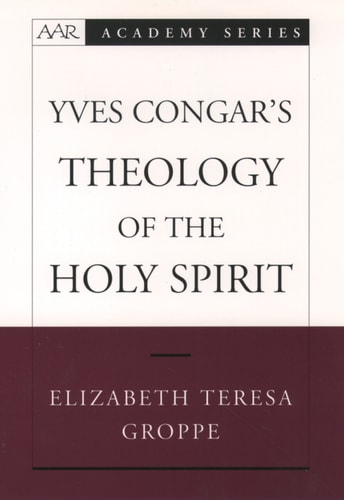
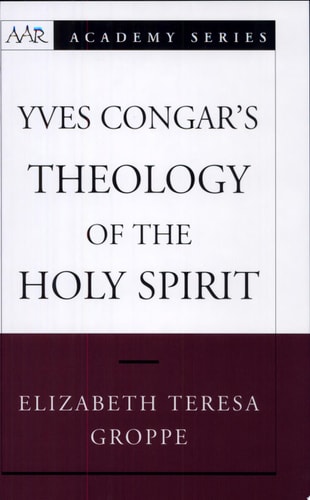
Yves Congar's Theology of the Holy Spirit
0
0
As an Amazon Associate and affiliate partner, Menrva Books earns from qualifying purchases. Learn more
Author Description
The French Dominican theologian Yves Congar is recognized by many as the most important Roman Catholic ecclesiologist of the 20th century. He was the thinker behind some of the major decrees of the Second Vatican council. He was also a leader in the ecumenical movement in Europe throughout most of the century. Despite his importance, there are few books about Congar in English. Congar's pneumatology, argues Groppe, can enrich various ongoing theological discussions, including reflection as to whether the church should be hierarchical or a democracy, the development of "persons in communion" as a framework for contemporary theological anthropology and ecclesiology, and deliberations about the personhood of the Holy Spirit.
Menrva's Summary
THE THESIS
This work investigates the pneumatological framework of Yves Congar to determine its potential for resolving contemporary debates within Roman Catholic ecclesiology and theological anthropology. Elizabeth Teresa Groppe, a scholar of systematic theology, utilizes Congar's extensive body of work to argue that his specific understanding of the Holy Spirit provides a necessary bridge between traditional hierarchical structures and modern democratic impulses. By analyzing Congar's role in the Second Vatican Council, the author demonstrates how his focus on the personhood of the Holy Spirit informs current discussions regarding the nature of the church as a communion of persons.
THE SCOPE MAP
What You Will Find
- An analysis of Yves Congar's contributions to 20th-century Roman Catholic ecclesiology.
- A detailed examination of pneumatology as a basis for theological anthropology.
- A framework for evaluating church governance models through the lens of the Holy Spirit.
Scope Limits
- The text does not provide a comprehensive biography of Congar's life outside of his theological output.
- The analysis is restricted to Congar's specific theological contributions rather than a broad history of the ecumenical movement.
THE AUTHORITY PERSPECTIVE
Scholars and theologians recognize this text as a significant contribution to the limited English-language literature on Congar's specific theological focus. Readers frequently note the academic density of the prose, which is intended for those with a background in systematic theology.
Page Count:
272
Publication Date:
2004-01-01
Publisher:
Oxford University Press
ISBN-10:
0190290315
ISBN-13:
9780190290313
Religion
Ecclesiology
Holy Spirit
Christian History
Theology
Catholicism
Pneumatology
Community Tags
Other Editions(2)
Similar Books